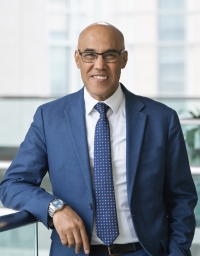
Provost and Vice-President, Academic

Interim Provost and Vice-President, Academic Dr. Carole Richardson 


A woman in pink and black top in front of a colorful background

Dr. Carole Richardson

Dr. Carole Richardson is an accomplished leader with extensive experience as a senior academic administrator. She has served Nipissing University in a variety of academic leadership roles, including Provost and Vice President, Academic and Research (Interim); Dean of Education and Professional Studies; and Dean of the Schulich School of Education. She has also held the position of Associate Dean and has been a dedicated faculty member at Nipissing since 2002, teaching Curriculum Studies in Music Education to pre-service teachers.

Before joining Nipissing, Dr. Richardson taught classroom music in middle schools across Ontario and in the Cayman Islands, where she also assembled and conducted choirs—a passion she continued to nurture within the University community. Her research focuses on collaborative narrative inquiry as methodology and explores the transformative role of Arts experiences in students’ lives. She has also published in the areas of special education and international teaching.

Dr. Richardson holds a Bachelor of Music in Performance from Acadia University, an Artist Diploma from the University of Toronto, as well as a Bachelor of Education, Master of Education, and PhD in Curriculum, Teaching and Learning from the Ontario Institute for Studies in Education (OISE) at the University of Toronto.

Policies

Tenure and Promotion

Quality Council Institutional Audit Reports

Executive Summaries & Implementation Plans

Below are the​ Executive Summaries and Implementation Plans grouped by Faculty:

Art and Science


ProgramSenate Approval DateFile
Anthropology21 Nov 2025
Biology13 Oct 2023
Ancient Studies14 June 2024
​Computer Science​14 July 2023
Economics08 Apr 2016PDF
English Studies9 Oct 2020
MES/MESc Environmental13 Dec 2019
Fine Arts13 Sept 2019
Gender Equality and Social Justice14 July 2023
Geography13 Sept 2019
History10 Sept 2021
M.A. History10 Sept 2021
Mathematics8 Nov 2024
M.Sc. Mathematics13 Sept 2019
Indigenous Studies16 Jan 2026

PDF

Philosophy10 May 2024
Political Science16 Jan 2026

PDF

Psychology11 Oct 2024
Religions and Cultures14 July 2023
Sociology13 Sept 2019
M.A. Sociology  
Bachelor of Liberal Arts16 Jan 2026
Bachelor of Liberal Sciences16 Jan 2026
Child and Family Studies8 Dec 2023
Social Welfare and Social Development10 May 2024

Education and Professional Studies

 ProgramSenate Approval DateFile
Education - B.Ed.13 Sept 2019
Education - Concurrent B.Ed.13 Sept 2019
M.Ed.13 Sept 2019
Ph.D in Educational Sustainability13 Sept 2019
M.Sc. Kinesiology16 Jan 2026
Physical and Health Education13 Sept 2019


School of Business - BBA13 Sept 2019


School of Business - BComm13 Sept 2019


Criminology and Criminal Justice13 Sept 2019


School of Nursing - RPN to BScN13 Dec 2019


School of Nursing - BScN Collaborative13 Dec 2019
School of Nursing - BScN (SPP)13 Dec 2019
School of Nursing - RPN to BScN (on-line)13 Dec 2019
Social Work12 Sep 2025


Major Modifications of an Existing Program

The Major Modification Protocol encourages and reinforces the ongoing and continuous improvement of programs and associated curriculum. Academic units are encouraged to have a plan in place to actively monitor key performance indicators (i.e., program structure, requirements, objectives, learning outcomes, assessment and student achievement) that will help them identify modifications to the program that will improve and enhance the quality of the program.

Major Modifications typically include, but are not limited to, one or more of the following:

a) Requirements that differ significantly from those existing at the time of the previous cyclical program review, for example:

  • course requirements comprising more than one third of the entire program
  • a merger of two programs
  • The introduction or deletion of an undergraduate thesis or capstone project
  • The introduction or deletion of a work experience, co-op option, internship or practicum, or portfolio

b) Change to at least one third of the program-level learning outcomes.

c) Significant changes to the program’s delivery, including:

  • 50% or more of the program’s faculty;
  • Loss of or addition to the essential physical resources, where these changes impair or enhance the delivery of the approved program.   
  • the existing mode(s) of delivery (e.g., different campus and/or changes to online/hybrid delivery impacting 30% or more of program, introduction or deletion of full- or part-time program options). For more detail on mode of delivery changes, please see 4.3 of the Institutional Quality Assurance Protocol. 

d) Change in program name and/or degree nomenclature, when this results in a change in learning outcomes; and/or

e) Addition of a single new field to an existing graduate program.

Consideration for Changes to Mode of Delivery

When changing the mode of delivery of a program to online for all or a significant portion of a program that was previously delivered in-person, consideration of the following criteria is strongly encouraged as part of the approval process for the proposed major modification:

  1. Maintenance of and/or changes to the program objectives and program-level learning outcomes.
  2. Adequacy of the technological platform and tools.
  3. Sufficiency of support services and training for teaching staff.
  4. Sufficiency and type of support for students in the new learning environment; and
  5. Access. 

Effective December 2023, please refer to the following

December 2023 - we have a new Nipissing University Institutional Quality Assurance Protocol (NUIQAP) re-ratified by the Quality Council May 5, 2023 and approved by the Senate on June 26, 2023.

Nipissing University Institutional Quality Assurance Protocol (NU-IQAP)

If you require templates etc., please send your request to iqap@nipissingu.ca

Quality Assurance Presentation

February 28, 2024

For Major Modifications please use the following templates

Please use the following form to submit a Letter of Intent:

Complete the Proposal only after approval of the LOI has been granted.

If you have any questions, please do not hesitate to contact the Office of the Provost and Vice-President, Academic at iqap@nipissingu.ca.

The primary purpose of the Institutional Quality Assurance Protocol (IQAP) and associated procedures is to ensure the high quality of, and to promote standards of excellence in Nipissing’s new and existing academic programs. The IQAP has been developed by the Ontario Universities Council on Quality Assurance (referred to as the “Quality Council”) to be consistent with the protocols contained in the Quality Assurance Framework.

This Quality Assurance Framework comprises of three distinct components:

  • The Protocol for the Cyclical Review of Existing Programs is used to secure the academic standards both of existing undergraduate and graduate degree programs  and for-credit graduate diploma programs, and to assure their ongoing improvement.
  • The Protocol for New Program Approvals applies to both new undergraduate and graduate programs. 
  • Proposals for new for-credit graduate diplomas are to be submitted for approval through the Protocol for Expedited Approvals.
  • In accordance with the Protocol for Major Modifications (Program Renewal and Significant change), each institution is responsible in its IQAP to assure program quality where major substantive changes are made to existing and previously approved programs, and where learning outcomes are not changed in ways that denote a truly new program. Institutions will report annually to the Quality Council on the Major Modifications approved that year.

Nomination Process

Before nominating, please review the Policy for the Award:

Nominations must be received no later than March 27, 2026 to be considered.

Submit a Nomination

Chancellor's Award for Excellence in Teaching, Research and Service »

To learn more about each award and view past recipients, see the information provided below.

Excellence in Research

The Chancellor’s Award for Excellence in Research was established to recognize and celebrate the value of research conducted by Nipissing University full-time faculty and those faculty members whose research makes a significant impact on the discipline or field of research. Research that faculty and their students undertake plays a significant role in the growth of Nipissing University and the education of its students.

Research Award Winners

2025

Dr. Kirsten Greer, Department of Geography and History

2024

Dr. Brenda Bruner, Physical Health and Education

2023

Two Award Winners

Dr. Rob Breton, Department of English Studies

Dr. Mary Patricia Sullivan, School of Social Work

2022

No nominations received

2021

Dr. Katrina Srigley, Department of History

2020

Dr. Hilary Earl, Department of History

2019

Dr. Mukund Jha, Department of Biology

2018

Dr. Steven Arnocky, Department of Psychology

2017

Dr. Mark Wachowiak, Department of Mathematics and Computer Science

2016

Dr. Justin Carré, Department of Psychology

2015

No Recipient

2014

Dr. David Hemsworth, School of Business

Excellence in Teaching

FASBU - Full time Faculty

The Chancellor’s Award for Excellence in Teaching was established to recognize full-time faculty with an outstanding record of teaching, including evidence of engagement with the scholarship of Teaching and Learning and evidence of sustained innovation in teaching practice including, but not limited to, in areas such as teaching collaborations, experiential learning, interdisciplinary teaching and who plays a significant role in the education of Nipissing University students.

Full time Teaching Award Winners

2025

Dr. Susan Srigley, Faculty of Arts and Science

2024

Dr. Gyllian Phillips, Department of English

2023

Dr. Wendy Peters, Department of Gender Equality and Social Justice

Dr. John Vitale, Schulich School of Education

2022

Dr. Charles Anyinam, School of Nursing

2021

Dr. Renée Valiquette, Department of Gender Equality and Social Justice and Child and Family Studies

2020

Two Award Winners

Dr. Nancy Maynes, Schulich School of Education

Dr. Laurie Peachey, School of Nursing

2019

Dr. Steven Hansen, Schulich School of Education

2018

Two Award Winners:

Dr. Benjamin Kelly, Department of Sociology and Anthropology

Dr. Glen Sharpe, Schulich School of Education

2017

Two Award Winners:

Dr. Terry Campbell, Schulich School of Education

Dr. Carly Dokis, Department of Anthropology

2016

Dr. Peter Nosko, Biology and Environmental Science

2015

Dr. Glenda Black, Schulich School of Education

2014

Two Award Winners:

Dr. Sal Renshaw, Gender Equality and Social Justice

Dr. John Allison, Schulich School of Education

CASBU - Part-time Faculty

The Chancellor’s Award for Excellence in Teaching (CASBU) was established to recognize contract academic faculty members with an outstanding record of teaching and the importance of exceptional teaching and who play a significant role in the education of Nipissing University students.

Part-time Teaching Award Winners

2025

Dr. Tiffany Roberts, Instructor, Schulich School of Education

2024

Anna Pearson, Instructor, Schulich School of Education

2023

Dr. Jonathan Pitt, Schulich School of Education, Department of Indigenous Studies

2022

Erin Dokis, Department of Gender Equality and Social Justice

2021

Laura Killam, School of Nursing

2020

Mr. Bill Steer, Schulich School of Education

2019

Dr. Rick Senior, School of Nursing

2018

Laura Rossi, Department of Biology and Chemistry

2017

Jesse Davis, Applied and Professional Studies

2016

Joanne Kmiec, Schulich School of Education

2015

Joseph Boivin, Department of Biology

2014

Jennifer (Jenny) Guibert, Schulich School of Education

Service

The Chancellor’s Award for Excellence in Service was established to recognize full-time faculty with an outstanding record of service at all levels of the University, the broader community, and the discipline.

Service Award Winners

2025

Dr. Siva Prasad Ravi, School of Business

2024

Dr. Jonathan Muterera, School of Business

2023

Dr. Blaine Hatt, Schulich School of Education

2022

Dr. Sal Renshaw, Department of Gender Equality and Social Justice

2021

Dr. Susan Srigley, Department of Religions and Cultures

2020

Dr. Gyllian Phillips, Department of English

2019

Dr. Toivo Koivukoski, Department of Political Science

Directory

Vice-President

Administration

Staff

Full-time Employee