





Off-Campus Living

Off Campus Living logo

Nipissing University’s Off Campus Living Program supports students who choose to live off campus by providing the resources, education, and tools they need to make informed housing decisions and thrive as members of both the campus and local community through partnerships with platforms like Places4Students and SpacesShared, students have access to a variety of housing options to suit their specific needs

Getting Started:

The search for off-campus housing should begin early before each academic term, as available rental options can become increasingly limited closer to move-in periods. Students are strongly encouraged to begin exploring housing opportunities as early as possible to increase their chances of finding accommodations that best suit their needs.

Average Rent: $500–$850 per month (varies by location, amenities, and accommodation type)

Contact Us:

Phone: 705-474-3450 ext. 4242
E-mail: offcampusliving@nipissingu.ca

Please note: the office of Off Campus Living is a virtual office.

Communication via phone or email is preferred and we will return your contact as soon as we are able. 

Should you wish to meet in person, please email or call to set up an appointment.

Find a Place That is Just Right for You

Places4Students.com

Places4Students.com

Places4Students provides students, schools and landlords with a high quality, off-campus housing service. The website provides a large real-time database for student housing vacancies in our area, including photos and text, contact information and property features.

Contact:

Places4Students Customer Support Team:


Landlords:

Post your property listings, with fantastic features and benefits, such as:

  • Google mapping capabilities
  • Up-to-date database that is real-time 24/7
  • Descriptive listings with photos, amenity icons and floor plans to advertise your property most effectively
  • Quick search capabilities allow students to sort listings by price, preferred features and specific requirements
  • Live customer support (toll-free) or “help” link online
  • Partner schools promote and refer students directly to the website
  • And more

Register for a Landlord Account ❯  Sign in to Landlord Account ❯

Students:

If you are looking for a home away from home in North Bay, search listing on Places4Students.

Here are some benefits for students creating an account with Places4Students.com:

  • Have a place to rent? Post a 'Student Sublet'
  • Looking for a place to live? Post a 'Student Profile'
  • Save 'Search' preferences
  • Save 'Favorite' listings for reference and follow-up
  • And more

Nipissing landing page ❯

SpacesShared.ca

SpacesShared logo

SpacesShared is a homesharing technology platform that empowers two key groups to meet each other: older adults and students. Launched in 2023, SpacesShared is responding to the Canadian housing crisis with a solution that prioritizes connection, comfort, and community. 

Students looking for a safe, affordable place to stay can now quickly and affordably connect with older adult hosts who would like some extra income, help around the house, and an opportunity to give back. 

The platform is entirely self-contained from application, to agreement, rent and relationship management on its website. It’s a new way to honour an old tradition: opening homes to people and experiences that enrich lives and communities.

Have a spare room? ❯  Looking for a room? ❯

Looking for other rental search options?


Online Platforms: Search for rentals on Facebook Marketplace, Kijiji, or Airbnb.

Facebook Groups: Join local rental groups like North Bay Apartments For Rent or Nipissing University Off-Campus Rental Housing

Hotel Partnerships: We’ve partnered with local hotels offering short- and long-term accommodation. Consider sharing costs with a roommate. Contact hotels directly to secure a space.

Need more help? We provide education and resources, but it's up to each student to contact landlords and roommates for rental arrangements.

Housing Insecurity


Nipissing University recognizes that safe and accessible housing is a fundamental need and housing insecurity can impact students academic success. There are a variety of campus services that may be helpful to students navigating housing insecurity.

Student Financial Services

Students are encouraged to contact Financial Aid, at any time for support in determining what financial supports may be available to assist them in times of need.

Awards and Bursaries: Students in financial need may be eligible for some of the many different in-year bursaries & awards that are offered. Please make note of the deadline to apply each year.

Student Support Fund: Students who may face unexpected financial hardship are encouraged to apply to the Student Support Fund.

Access & Inclusion

For students seeking advocacy and equity support in relation to their current housing situation or in their effort to find housing, the university Access & Inclusion Coordinator is available to help identify options & possible supports. Please email sds@nipissingu.ca to be connected with the staff that can support you the best.

Emergency Housing

Students facing a housing emergency or immediate housing insecurity are encouraged to contact Off Campus Living (offcampusliving@nipissingu.ca) and Residence Life (residence@nipissingu.ca). Through the Residence Life department a number of emergency options may be available to students in need of housing support on a short term basis and/or who may be looking for housing for the remainder of their academic term.

Nipissing Resources

Campus Resources:

NamePhoneEmailWebsite

Campus Security, On-Duty Officers 24/7

Cell: 705-498-7244 or
705-471-2488
 Security | Nipissing University
Campus Food Services705-474-7600 ext. 5413 Dining on Campus | Nipissing University
Campus Shop Bookstore705-474-7600 ext. 5347nipissingu@bkstr.comThe Campus Shop Apparel, Merchandise, & Gifts (bkstr.com)
Campus Health Centre705-474-7600 ext. 5261campushealthcentre@canadorecollege.caCampus Health Centre | Nipissing University

Student Resources:

NamePhoneEmailWebsite
Student Unionext. 4801communications@nusu.comStudent Union
NUSU Food Bank  NUSU Food Pantry
Student Development and Services sds@nipissingu.caStudent Development and Services
Financial Aidext. 4311finaid@nipissingu.caStudent Financial Services
Enji giigdoyang Office of Indigenous Initiativesext. 4899indigenousprograms@nipissingu.caIndigenous Initiatives

Whether you are renting your first apartment or becoming a landlord for the first time, understanding your rights and responsibilities is essential. This resource section provides practical information, tips, and guidance to help both tenants and landlords navigate the rental process, build positive rental relationships, and create a successful rental experience for everyone involved.

Resources For Tenants

Rental Search Tips

Finding the right rental takes time and preparation. These tips will help you search effectively, recognize reputable listings, ask the right questions, and make informed decisions before signing a lease.

  • Start Early - Have you applied for Residence? If you have, you may need a back-up plan if you are not offered a spot. Rental listings can fill quickly. Begin your search early and check listings regularly
  • Know What You Need - Consider your budget, location, transportation, and must-have features
  • Ask Questions - Clarify rent, utilities, maintenance, and expectations before committing
  • See The Unit Before You Sign Whenever possible, view the property in person
  • Inspect The Space - Document the condition of the unit and identify concerns before moving in
  • Talk to Current Tenants About the Landlord and Property - Ask about the landlord's response time to repairs, maintenance or other issues that are of your concern.


Budgeting for Off-Campus Living

Creating a budget is one of the best ways to prepare for living off campus. Knowing how much money you have coming in and where it needs to go each month can help reduce financial stress and prevent unexpected expenses.

When building your budget, separate your expenses into fixed and variable costs.

Fixed Expenses

Fixed expenses are costs that stay the same each month and are easier to plan for. These may include:

  • Rent
  • Tenant insurance
  • Parking fees
  • Internet (if billed at a fixed rate)
  • Monthly transit pass

Variable Expenses

Variable expenses can change from month to month depending on your habits and lifestyle. These may include:

  • Groceries
  • Utilities (if not included in rent)
  • Gas or transportation costs
  • Dining out and coffee
  • Entertainment and subscriptions
  • Laundry
  • Household supplies

Budgeting Tips

  • Track your monthly income (employment, OSAP, scholarships, family support, etc.).
  • Pay your rent and other fixed expenses first.
  • Set aside money each month for groceries, transportation, and personal spending.
  • Build an emergency fund, even if it's only a small amount each month.
  • Review your budget regularly and adjust it as your expenses change.

Remember, the cheapest rental isn't always the most affordable. Consider the total monthly cost, including utilities, transportation, parking, internet, and other living expenses before making your decision.

Need Help?

Need help planning out your budget? Check out Off Campus Living's Student Renter Budget Resource Guide
 

Understanding Your Lease

Most residential rental agreements in Ontario must use the Ontario Standard Lease, a government-approved lease that outlines the rights and responsibilities of both landlords and tenants. Using the standard lease helps ensure that everyone understands the terms of the tenancy and that the agreement complies with Ontario's Residential Tenancies Act.

Before signing a lease:

  • Read the entire agreement carefully and ask questions if something is unclear.
  • Ensure all agreed-upon terms, such as the monthly rent, included utilities, parking, and move-in date, are written in the lease.
  • Keep a signed copy of the lease for your records (your landlord is also required to send a signed copy back to you within 21 days)

What You'll Find in the Standard Lease

The Ontario Standard Lease includes information such as:

  • The names of the landlord and tenant(s)
  • The rental property's address
  • The amount of rent and when it is due
  • Which utilities and services are included
  • Rules regarding parking, smoking, and pets (where permitted)
  • The amount of the rent deposit (last month's rent)
  • Any additional terms that comply with Ontario law

Know Your Rights

A lease cannot remove or reduce your rights under the Residential Tenancies Act. If a term in the lease conflicts with the law, the law takes precedence. Understanding your lease before you sign can help prevent misunderstandings and ensure you know your rights and responsibilities throughout your tenancy.

Moving In/Out

Whether you are moving into your first off-campus rental or preparing to leave your current home, planning ahead can help make the transition smoother. This resource provides tips and reminders to help you understand your responsibilities, protect yourself, and maintain a positive rental experience.

Moving In

Before moving into your rental:

  • Review and sign your lease carefully before receiving keys.
  • Complete a move-in inspection and document the condition of the unit with photos or videos.
  • Confirm important details with your landlord, including:
    • How to pay rent
    • Utility responsibilities
    • Building rules and expectations (if any)
    • Maintenance reporting procedures
  • Set up services you are responsible for, such as internet or utilities.
  • Consider creating a roommate agreement to discuss expectations around cleaning, guests, shared expenses, and shared spaces.

Moving Out

When preparing to leave your rental:

  • Review your lease to understand notice requirements and move-out expectations.
  • Provide proper notice to your landlord when required.
  • Remove all personal belongings and clean the unit before leaving.
  • Repair any damage that you are responsible for beyond normal wear and tear.
  • Return all keys, access cards, and other items provided by your landlord.
  • Keep records of communication with your landlord and retain important documents related to your tenancy.

A smooth move-in and move-out process helps protect both tenants and landlords and can prevent misunderstandings at the end of a tenancy.

Living With Roommates

Living With Roommates

Sharing a home with roommates can be an exciting and rewarding experience, but it also requires communication, cooperation, and respect. Establishing expectations early can help prevent misunderstandings and create a positive living environment for everyone.

Before Moving In Together

Discuss important topics with your roommates before signing a lease or moving in, including:

  • Cleaning responsibilities and shared chores
  • How rent, utilities, and household expenses will be divided
  • Food sharing and grocery expectations
  • Guests, overnight visitors, and social activities
  • Quiet hours and study expectations
  • Use of shared spaces and personal belongings
  • Communication preferences and how concerns will be addressed

Creating a Roommate Agreement

A roommate agreement is a helpful tool for setting shared expectations. While it does not replace a lease, it can help roommates discuss responsibilities and establish guidelines for living together.

Consider including:

  • A cleaning schedule
  • Expectations for shared items and supplies
  • Rules around guests and noise
  • How disagreements will be handled

Maintaining a Positive Living Environment

Successful roommate relationships are built on:

  • Communication: Address concerns early and respectfully.
  • Respect: Be mindful of shared spaces, schedules, and personal boundaries.
  • Accountability: Follow through on agreed-upon responsibilities.
  • Flexibility: Recognize that everyone has different habits and routines.

Living with roommates may come with challenges, but setting clear expectations and having open conversations can help create a comfortable and respectful home for everyone.

Resources For Landlords

Before You Rent

If you are thinking of becoming a landlord, carefully research the legal obligations and responsibilities you’ll assume once you’ve entered into a tenancy agreement. In addition to clearly understanding a landlord’s legal rights and responsibilities, you must also realize the significant commitment you are making when you rent to someone. What may seem like a fairly benign requests from a tenant (or potential tenant), or a small decision made about the rental space, could result in the landlord being in a costly legal predicament! 

On Landlord Self Help Centre website you can find the information you need including: security of tenure, setting the rent, tenant screening, discrimination, rental deposits, tenant information package, interest on deposits, receipt provision, access to vital services, termination of tenancy, and more. 

Residential Rental Housing License - City of North Bay

In 2012, the City of North Bay created the Residential Rental Housing by-law 2012-55, which created the Residential Rental Housing License. This license needs to be obtained by landlords who rent out 3-5 bedrooms in a single house. Once an application for the license has been made, an inspection of the house will be conducted by at least 2 members of city staff from the Fire, Building, and Zoning departments to ensure the building is up to code and follows the city by-laws. Another inspection by an electrical contractor is also required. 

Once these inspections have been passed successfully, the landlord will obtain their license. A certificate proving the landlord has obtained this license must be displayed within 1 meter of the main entrance of the rental house. This license is valid for 2 years and must be renewed. The license puts ease of mind to both the landlord and the students renting because everyone involved knows that the house is up to code and is safe.  

For more information check out the links below: 


This program is currently on hold. Those operating rental units are required to meet the province’s Fire Code and Building Code and must comply with all City of North Bay By-laws

Understanding Landlord Responsibilities

Being a landlord involves more than collecting rent, it also includes maintaining a safe, respectful, and positive rental experience for your tenants. Understanding your responsibilities can help prevent misunderstandings, support positive landlord-tenant relationships, and ensure your rental property meets legal requirements.

Maintaining a Safe and Suitable Rental Unit

Landlords are responsible for ensuring the rental unit is maintained in a good state of repair and meets health, safety, and maintenance standards. This includes:

  • Completing necessary repairs in a timely manner
  • Maintaining essential services (such as heat, water, and electricity where applicable)
  • Addressing maintenance concerns reported by tenants
  • Ensuring common areas and the property are safe and accessible

Understanding Tenant Rights

Tenants have rights protected under Ontario's Residential Tenancies Act (RTA). Landlords should be familiar with their responsibilities, including:

  • Providing proper notice before entering a rental unit
  • Following legal requirements for rent increases and changes to tenancy agreements
  • Respecting tenant privacy
  • Using appropriate processes when addressing concerns or ending a tenancy

Clear Communication & Expectations

Strong landlord-tenant relationships begin with clear communication. Consider:

  • Providing tenants with important information before move-in
  • Establishing preferred communication methods
  • Responding to questions and maintenance requests in a timely manner
  • Documenting important conversations and agreements

Supporting Student Tenants

Many students are renting independently for the first time. Providing clear expectations around rent payments, maintenance requests, property care, and communication can help create a successful rental experience for both landlords and tenants.

A proactive approach to landlord responsibilities helps protect your property while creating a positive experience for your tenants.

Creating a Rental Listing

A clear and accurate rental listing helps attract responsible tenants and ensures students have the information they need when searching for housing. Providing detailed information upfront can reduce questions, prevent misunderstandings, and help find the right tenant for your property.

What to Include in Your Listing

A strong rental advertisement should include:

  • Rental property address or general location
  • Monthly rent amount
  • Available move-in date and lease duration
  • Number of bedrooms and bathrooms
  • Utilities included and additional costs
  • Parking availability
  • Laundry information
  • Included amenities and features
  • Photos that accurately represent the property

Provide Accurate Information

Transparency is important when advertising a rental. Be clear about:

  • What is included in the monthly rent
  • Any additional fees or expenses tenants should expect
  • Property/Building rules and expectations
  • Whether the rental is furnished or unfurnished

Advertise Through Trusted Housing Platforms

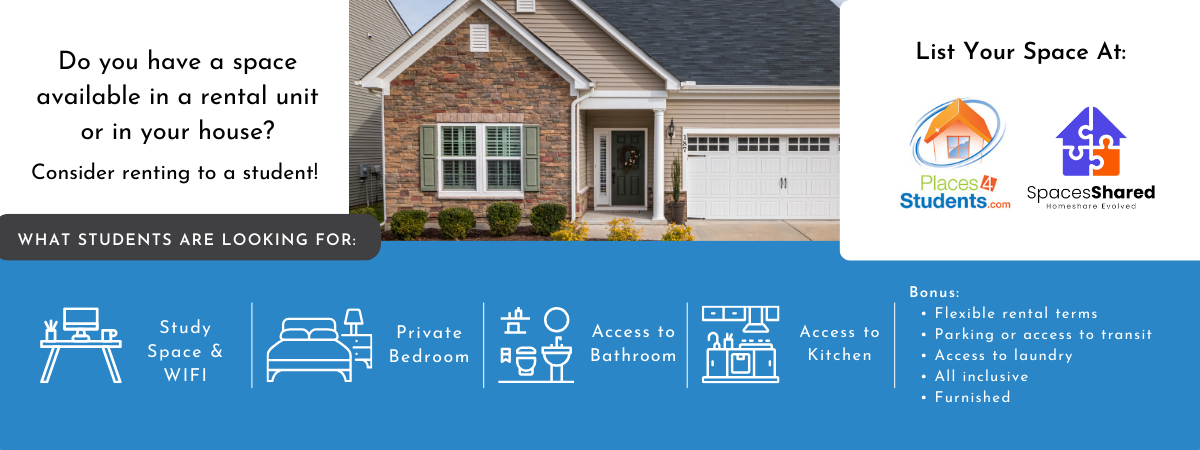
Off Campus Living partners with trusted rental platforms to help connect landlords with students searching for housing. Consider listing your rental through:

These platforms help increase visibility among students seeking off-campus accommodations and provide a centralized location for housing opportunities.

Tips for a Successful Listing

  • Use clear, recent photos of the rental space.
  • Highlight features that may be important to students, such as proximity to campus, public transportation, parking, and included services.
  • Respond to inquiries professionally and in a timely manner.
  • Keep your listing updated when the rental is no longer available.

A well-prepared rental listing helps students make informed decisions and helps landlords connect with potential tenants who are a good fit for their property.

Selecting Tenants & Establishing a Tenancy

Creating a successful rental experience starts with finding the right tenant and establishing clear expectations from the beginning. Following a fair screening process and using the proper rental agreement helps protect both landlords and tenants while creating a positive foundation for the tenancy.

Screening Potential Tenants

Tenant screening can help landlords make informed decisions when selecting a tenant. A consistent and fair process helps ensure all applicants are treated equally while identifying a tenant who is a good fit for the rental property.

When screening potential tenants, landlords may consider:

  • Rental history and previous landlord references
  • Ability to pay rent, such as income or other financial information
  • References and relevant application information

Landlords should ensure their screening process follows applicable laws, including human rights requirements. Decisions should be based on legitimate rental criteria and not discriminatory factors.

Ontario Standard Lease

In Ontario, most residential rental agreements must use the Ontario Standard Lease, a government-approved form that outlines the rights and responsibilities of both landlords and tenants.

The lease helps establish clear expectations by outlining important information, including:

  • Names of the landlord(s) and tenant(s)
  • Rental property address
  • Monthly rent amount and payment details
  • Services and utilities included
  • Term of the tenancy
  • Rules and additional terms that comply with Ontario law

Before a tenant moves in:

  • Ensure all parties review and understand the lease.
  • Include any agreed-upon terms in writing.
  • Provide tenants with a copy of the signed agreement (a landlord is required to return a signed copy back to the tenant within 21 days of receiving it from the tenant)
  • Discuss expectations around rent payments, maintenance, communication, and property care.

Additional Services & Tenant Responsibilities

If a landlord and tenant agree that the tenant will complete additional services, such as lawn care, grass cutting, snow removal, or other outdoor property maintenance, this arrangement should be documented through a separate agreement and should not be included as part of the lease.

When a tenant is providing a service to the landlord, they are completing work beyond their responsibilities as a tenant and should be appropriately compensated. The separate agreement should clearly outline the expectations, responsibilities, and compensation for the service.

These types of agreements cannot be enforced in the same way as lease obligations. A landlord cannot evict a tenant because the tenant did not complete an additional service, such as failing to cut the grass or remove snow.

A clear screening process and properly completed lease can help prevent misunderstandings, support positive landlord-tenant relationships, and create a successful rental experience for everyone involved.

Maintaining a Tenancy

A successful tenancy requires ongoing communication, respect, and cooperation between landlords and tenants. Once a lease has been signed, landlords play an important role in maintaining a safe, well-maintained rental property while creating a positive relationship with their tenants.

Communication & Setting Expectations

Clear communication from the beginning of a tenancy can help prevent misunderstandings. Landlords should:

  • Establish preferred methods of communication with tenants.
  • Provide important information about the property, including garbage/recycling procedures, maintenance reporting, and property expectations.
  • Respond to tenant questions and concerns in a timely and respectful manner.
  • Keep records of important communication, agreements, and requests.

Maintenance & Repairs

Landlords are responsible for maintaining the rental property and ensuring it remains in a good state of repair. This includes:

  • Addressing maintenance concerns within a reasonable timeframe.
  • Maintaining essential services and systems.
  • Completing necessary repairs to keep the property safe and suitable for tenants.
  • Understanding the difference between normal wear and tear and tenant-caused damage.

Tenants should have a clear process for reporting maintenance concerns, and landlords should encourage early reporting to prevent smaller issues from becoming larger problems.

Property Expectations & Tenant Relationships

Setting clear expectations helps create a positive living environment for everyone. Landlords should communicate expectations around:

  • Property care and cleanliness
  • Noise and respectful behaviour
  • Garbage and recycling
  • Parking and shared spaces
  • Guest expectations
  • Reporting concerns or damages

Addressing Concerns

Concerns are best addressed early through respectful and solution-focused conversations. When issues arise:

  • Communicate concerns clearly and professionally.
  • Focus on the behaviour or issue rather than the individual.
  • Review any agreements or expectations that were previously established.
  • Follow the appropriate legal processes when necessary.

A proactive approach to communication, maintenance, and problem-solving helps protect the property while supporting a positive rental experience for both landlords and tenants.

Rent Receipts

Landlords are required to provide tenants with rent receipts for income purposes. 

A sample rent receipt created by OCL is provided HERE, however, a simple online search will give more examples for you to create your own. If you would like an editable version of the OCL rent receipt, please send us an email so that we can provide you with a digital copy.

Advice, Assistance, and Support

Landlord Self Help Centre provides a number of resources for landlords. Landlord’s Self-Help Centre is a non-profit community legal clinic funded by Legal Aid Ontario and mandated to support Ontario’s small-scale landlord community exclusively. LSHC provides information, summary advice and referrals. It develops educational materials and delivers educational outreach programs which aim to help small landlords better understand their rights and responsibilities and navigate the regulatory environment to which they are subject. This site offers information on a variety of topics related to residential tenancies and rental relationships in Ontario, it is geared toward the needs of small-scale landlords. 

Shared Resources

Fire Prevention & Safety

Fire Prevention and Safety

Being fire aware is very important when you are looking for a rental property and making sure you are aware of them prior to viewing listings will help you to know what to ask and look for. Check out our Safety Tips below and the 'Searching Tips and Checklists"' section to find what your should be looking for in a safe rental and some suggestions on questions that you should be asking landlords.

We are working with the North Bay Fire and Emergency Services to help ensure the fire safety of our students. North Bay Fire and Emergency Services provides fire protection services through a range of programs designed to protect the lives and property from the fires, sudden medical emergencies, or exposure to dangerous conditions. Visit their website to find more information on the list below and more:

  • Safety videos
  • Fire Safety Legislation
  • Fire Inspections
  • Fire Safety Plans
  • Barbecue Safety

"See It Before You Sign It" - Before a lease gets signed make sure the rental property is fire safe first (Video).

North Bay Safe Student Housing Fire Safety Checklist

Home Fire Safety Checklist


Protecting Yourself and Your Property

Living in North Bay, as in any large urban area, requires taking adequate safety precautions. Be observant at all times. Anticipation is a major factor in preventing crimes.

  • If someone knocks on your door, identify the person before you open the door.
  • At all times require service personnel to provide identification and authorization from your landlord before letting them into your room or apartment.
  • When traveling at night, try to arrange to go with one or more friends.
  • If walking, stay in well-lit, heavily traveled areas. Walk with confidence to convey that you are aware and in control.
  • If you think someone is following you, switch direction or cross the street. If the follower persists, call the police immediately, and try to find a lighted store or home to ensure safety.
  • Always have your keys in hand when you approach your house or apartment. Fumbling in your purse or pockets for a key can distract you and put you off guard.
  • If you have to use a public laundry facility, try to always go with a friend.
  • Make sure that your door has a deadbolt lock and keep it locked at all times.
  • Check all windows to see if they are secure and have adequate locks. Provide coverings for your windows and pull the shades or close the drapes at night.
  • Never leave an extra key outside for any reason; leave one with a friend nearby instead.

Ontario Standard Lease

The Ontario Standard Lease is a government-approved rental agreement that outlines the rights and responsibilities of both landlords and tenants. In most cases, landlords and tenants entering into a new residential tenancy in Ontario must use this standard form.

A written lease helps ensure that everyone understands the terms of the tenancy and provides a clear record of the agreement. Before signing a lease, both landlords and tenants should carefully review the document, ask questions about any unclear terms, and ensure all agreed-upon details are included.

The Ontario Standard Lease Includes:

  • Names and contact information of the landlord(s) and tenant(s)
  • Address of the rental property
  • Amount of rent and when it is due
  • Length and type of tenancy
  • Services and utilities included in the rent
  • Rules and responsibilities related to the rental unit
  • Additional terms that comply with Ontario's Residential Tenancies Act

Before Signing a Lease:

Both parties should:

  • Read the entire agreement carefully.
  • Ensure all important terms are included in writing.
  • Understand their rights and responsibilities.
  • Keep a copy of the signed agreement for their records.

A lease cannot remove or reduce rights and responsibilities established under Ontario law. Understanding the lease before signing helps create a clear and positive rental experience for everyone involved.

Residential Tenancies Act (RTA)

The Residential Tenancies Act (RTA) is the legislation that outlines the rights and responsibilities of most landlords and tenants in Ontario. It establishes rules for residential rental agreements and provides a framework for addressing issues that may arise during a tenancy.

Understanding the RTA helps both landlords and tenants know their responsibilities, communicate expectations clearly, and navigate the rental process more successfully.

The RTA Covers Topics Such As:

  • Responsibilities of landlords and tenants
  • Rental agreements and lease requirements
  • Rent payments and rent increases
  • Maintenance and repair responsibilities
  • Privacy and rules around entering a rental unit
  • Ending a tenancy
  • Resolving disputes between landlords and tenants

Landlord Responsibilities

Under the RTA, landlords are generally responsible for:

  • Maintaining the rental property in a good state of repair
  • Ensuring the unit meets health, safety, and maintenance standards
  • Following proper processes when making changes to a tenancy
  • Respecting tenant privacy and providing appropriate notice when required

Tenant Responsibilities

Under the RTA, tenants are generally responsible for:

  • Paying rent on time
  • Keeping the rental unit reasonably clean
  • Repairing or covering the cost of damage they or their guests cause beyond normal wear and tear
  • Following the terms of their lease and respecting the rights of others

Know Your Rights & Responsibilities

The RTA provides protections for both landlords and tenants. A successful tenancy is built on understanding these responsibilities, communicating openly, and addressing concerns appropriately.

For more detailed information, visit the Government of Ontario’s Residential Tenancies Act resources.

Maintenance & Repairs

Maintaining a rental property is a shared responsibility between landlords and tenants. Clear communication, timely reporting, and proper follow-up help ensure the rental unit remains safe, comfortable, and in good condition throughout the tenancy.

Landlord Responsibilities

Landlords are responsible for maintaining the rental property and ensuring it is kept in a good state of repair. This generally includes:

  • Completing necessary repairs in a timely manner
  • Maintaining the property so it meets health, safety, and maintenance standards
  • Ensuring essential services and systems are functioning properly
  • Addressing maintenance concerns reported by tenants
  • Completing repairs caused by normal wear and tear

Tenant Responsibilities

Tenants also play an important role in maintaining the rental unit. Tenants are generally responsible for:

  • Keeping the rental unit reasonably clean
  • Using the property and appliances appropriately
  • Reporting maintenance concerns as soon as possible
  • Repairing or covering the cost of damage they or their guests cause beyond normal wear and tear
  • Following reasonable rules outlined in their lease

Reporting & Responding to Maintenance Concerns

Effective communication can help prevent small issues from becoming larger problems. Tenants should:

  • Report concerns promptly and provide as much detail as possible
  • Include photos or videos when helpful
  • Follow the landlord's preferred process for submitting requests

Landlords should:

  • Acknowledge maintenance concerns
  • Communicate expected timelines for repairs
  • Keep tenants informed about progress
  • Document completed repairs and communication

Emergency vs. Non-Emergency Repairs

Some maintenance concerns require immediate attention while others can be addressed through regular repair processes.

Emergency concerns may include:

  • Loss of essential services
  • Unsafe conditions
  • Issues that may cause significant property damage

Entry without notice, emergency, consent

A landlord may enter a rental unit at any time without written notice,

  • In cases of emergency; or
  • If the tenant consents to the entry at the time of entry

Non-emergency concerns may include:

  • Minor repairs
  • Appliance issues
  • Cosmetic concerns

Addressing maintenance concerns respectfully and promptly helps protect the property, supports a positive landlord-tenant relationship, and contributes to a successful rental experience.

Community Resources

NamePhoneEmailWebsite
AIDS Committee of North Bay and Area705-497-3560 North Bay AIDS Committee
Alcoholics Anonymous705-474-7940 Alcoholics Anonymous Northeast Ontario
Amelia Rising
Sexual Assault Centre of Nipissing
24-Hour Crisis Line:
705-476-3355 or 
Office: 705-840-2403
info@ameliarising.caAmelia Rising
Arthritis Society,
Northeast Region - Sudbury
705-673-4641info@arthritis.caArthritis Society, Northeast Region
Brain Injury Sudbury and District705-670-0200info@biasd.caBrain Injury Sudbury and District
Canadian Hearing Society1-866-518-0000info@chs.caCanadian Hearing Society
CNIB1-800-563-2642 CNIB
Crisis Centre North Bay24-Hour Crisis Line: 705-474-1031info@ccnorthbay.caCrisis Centre North Bay
Community Counselling Centre of Nipissing705-472-6515info@cccnip.comCommunity Counselling Centre
Canada Drug RehabHelp Line: 1-888-245-6887 Canada Drug Rehab
Multiple Sclerosis Society1-800-268-7582info@mssociety.caMultiple Sclerosis Society
Nipissing Community Legal Clinic705-476-6603 Nipissing Community Legal Clinic
Nipissing Mental Health Housing and Support Services705-476-4088  
North Bay Food Bank705-495-3290debbie@northbayfoodbank.caNorth Bay Food Bank
North Bay Indigenous Friendship Centre705-472-2811reception@nbifc.orgNorth Bay Indigenous Friendship Centre
North Bay, Parry Sound District Health Unit705-474-1400contact@healthunit.caNBPSD Health Unit

North Bay Regional Health Centre

705-474-8600 North Bay Regional Health Centre
Pain Management Clinic705-495-7960 or
705-474-8600, ext. 3850
 Pain Management Clinic


How do I avoid and prevent rental fraud?

Rental fraud can happen anywhere to anyone. Being diligent is key to help in avoiding scams and fraud. There are two common types of rental fraud that affect both students and landlords: fraudulent rental properties and fraudulent renters looking for places to rent. Provided below is some information to help students identify aspects of rental fraud and precautions that should be taken to avoid becoming a victim.

Fraudulent Rental Properties

Fraudulent rental properties (including rooms or apartments for rent) tend to occur in locations that are considered ideal for the post-secondary student population, but also affect prime or desirable rental locations within a city and tend to target renters that are from outside the city.

People that are advertising these properties will usually find a way to ask for personal or banking information that looks innocent at first. You should always be cautious when giving out any personal or banking information and it can be used for identity fraud. After agreeing to rent, the people offering that space will ask for rent money (usually first and last) prior to your arrival and tend not to offer viewing of the space or will find excuses of why this is not possible. Upon your arrival you will learn that this space either doesn’t exist or was never available for rent in the first place.

Tips to consider

  • Research the property or physically go to the address provided to verify it exists
  • Schedule a viewing of the space and always read through any contract thoroughly before signing
  • If the people renting the space are rushing or pressuring you to sign a contract or send money quickly, this is usually a sign of a scam
  • If the people renting the space are not answering your questions or not allowing you to view the space first, this is usually a sign of a scam
  • Trust your instincts. If something feels off about your interactions, then it is probably a good idea to look at a different property

Fraudulent Renters

Fraudulent renters are people who are claiming to look for a place to rent but in the end have no intentions of living in that rental space. It is often seen that these people will send fraudulent payments, often overpayments, which they will then ask for the over paid money to be sent back to them. This also may seem innocent but can cause issues when banking information can be exchanged.

Tips to consider

  • Check the information that renters are providing you and verify any personal information
  • If you are speaking with someone from out of the country, do not provide them with your personal banking information. Consider setting up an email for EMT for this type of transaction
  • Only accept checks/deposits if the amount on them is the exact amount agreed upon; no more, no less. If an overpayment is accepted do not refund overpayments and suggest that the extra money be used for the next month’s rent
  • Ask that the renter communicate with you through their official post-secondary institution student email
  • When in doubt, you can ask the student for a ‘Proof of Enrolment’ letter, that they will be able to receive from Nipissing University. However, it is important to remember that students must be enrolled in courses in order to have access to their ‘Proof of Enrolment’ letter. Sometimes international students will not enroll in courses until they come to campus in order to receive assistance with the process. If this is the case, they should have received a letter of acceptance to their program at their institution and you can ask for proof of that
  • If you think you are being contacted by a scammer the best thing to do is to not respond and block them from contacting you any further

If you don’t feel comfortable about an email or phone call you receive from a potential tenant, 

  • If you don’t feel comfortable about an email or phone call you receive from a potential tenant, you do not need to continue contact with them

Additional Resources

If you happen to become a victim of fraud, don’t be embarrassed. File a complaint with the Canadian Anti-Fraud Centre.

Frequently Asked Questions for Tenants

Rent

How much rent can a landlord charge a new tenant?

The Tenant Protection Act allows a landlord and tenant to negotiate the rent at the beginning of the tenancy agreement. Since rent control was ended in the 1990s essentially the price of a new rental (a new agreement) is determined by the free market – whatever the landlord can get. Fortunately, once the tenant moves in, the rent will not increase for the next twelve months. When the rent does increase it can only increase by the rent control guideline for the year in which the increase takes effect. In some cases, the landlord may have made an application for an above guideline increase or the landlord and the tenant have agreed to a higher increase because of unit-specific capital expenditure work.

What is vacancy de-control?

Vacancy de-control means that when rental units are vacant the legislated rules about rent do not apply. A landlord and a tenant are free to negotiate a market rent and what services are included in the rent. Once the tenant has entered into a tenancy agreement, the rules about rent and the other rules in the Tenant Protection Act apply.

How many times a year may the landlord raise the rent?

A landlord is allowed to raise the rent only once a year (12 months since the tenant moved in, or since the last increase in rent). And that increase may be no more than the guideline increase, or an increase amount applied to and accepted by the Tribunal.

Can a landlord charge a deposit or a fee to get a rental unit?

A landlord can collect a rent deposit if it is requested on or before the date that the landlord and tenant enter into a tenancy agreement. The rent deposit cannot be greater than one month’s rent, or the rent for one rental period, whichever is less. If the rent has increased since the tenant paid the deposit, the landlord may require the tenant to pay the difference for the last rent payment.

Does a deposit have to be returned to a tenant when they leave?

A rent deposit is to be applied to the rent payment for the last rental period before the end of the tenancy, and at the end of the tenancy the deposit must be returned.

Does a landlord have to pay interest if a deposit is collected?

The landlord must pay the tenant 6% interest per year on the rent deposit. If the landlord does not pay the interest owed to the tenant, the tenant can make an application to the Tribunal or deduct the interest from the rent.

Does the landlord have to notify the tenant of a rent increase?

In order for the landlord to increase the rent, the landlord must serve a written notice of rent increase to the tenant at least 90 days before the date the rent increase is to take effect. The notice must tell the tenant how much the new rent will be and when to begin paying the new amount.

Can a landlord decide the method that the rent is to be paid?

Yes, a landlord can tell a new tenant how the rent must be paid – by cash, cheque or money order. Post-dated cheques can be suggested, but a person cannot be denied a rental unit for refusing to give them.

Does the landlord have to give the tenant a rent receipt?

The Tenant Protection Act requires a landlord to provide rent receipts, free of charge, to a tenant upon request. This request can be made for any payment or deposit the tenant gives to the landlord, including any payment of rent arrears. It is an offense for a landlord to refuse to provide a receipt where it is requested.

If a tenant is late with their rent, do they have time to pay their rent before the landlord can evict them?

If a tenant fails to pay rent on the date that it is due, the landlord can serve a notice of early termination to the tenant. This notice gives the tenant 14 days to vacate the premises unless the rent is paid on or before the date of termination. If the rent is not paid, the landlord can make an application to the Tribunal for an eviction order. If a tenant is persistently late with the rent, the landlord may serve a 60 day notice of termination for the end of the rental term. This 60 day notice does not provide the tenant with the option of paying the rent in order to void the notice.

Can a tenant withhold rent because the maintenance is bad?

No. Withholding rent can put tenants in jeopardy for non-payment of rent and a possible application by the landlord for termination of the tenancy. There are other options for dealing with maintenance problems such as contacting the landlord in writing about specific problems, filling an application for rent abatement with the Tribunal, or speaking with the superintendent or property manager.

Maintenance and Repair

As a tenant, what are my obligations concerning the condition of the rented premises?

A tenant is responsible for ordinary cleanliness and for damage caused either deliberately or negligently by the tenant, or a tenant’s family member or guest.

What are the obligations of the landlord concerning the condition of the rented premises?

A landlord has to keep the rental property in a good state of repair. If something is not working because of normal wear and tear, the landlord must fix it. A landlord must obey all health, safety and maintenance standards in any provincial laws or municipal bylaws.

Who is responsible if there is damage to the unit?

A tenant is responsible for paying for repairs where the tenant or one of the tenant’s guests or visitors caused the damage.

Who is responsible for maintaining the unit?

It is the landlord’s responsibility to maintain the unit.

What are my landlord’s obligations in regards to repairs?

Your landlord is obligated to make repairs to the rented premises so that it remains in the condition in which it was rented. This does not include damage which was purposeful or due to your negligence. In regards to repairs which are safety and health related, a landlord is obligated to make those repairs within a reasonable amount of time. Be sure to get promised repairs in writing before you move in.

What happens if my landlord with not make needed repairs?

If the landlord continuously refuses to make needed repairs, a tenant is authorized to have the needed repairs carried out, and then subtract the cost of those repairs from the next rent. Of note, however, is that a tenant is obligated to ensure that the cost of repairs is reasonable. This method should be used as a last resort. Remember to keep all receipts and sales slips.

When I vacate my apartment, must everything be in a perfect state of repair?

No, provided that the damage is minor and can be reasonably be considered part of the ordinary wear and tear upon the premises. For example, nail holes for hanging pictures). Where a tenant makes “improvements” such as wallpapering and painting without the consent of the landlord, the landlord can insist that the tenant remove or correct the “improvements” and restore the premises to its original condition.

A Tenant Ending a Tenancy

I signed a one year lease, but I want to move before the year is finished, what are my obligations?

If you abandon the premises, the landlord could sue you or your guarantors for any unpaid rent for the remainder of the lease. If you do plan to vacate your rental premise, you must give written notice to your landlord, and you should get a written confirmation of an acceptance of this termination. Overall, in order to terminate a tenancy, in most cases you will need to give double your duration payments.

How much notice does a tenant have to give if they want to move out?

When a tenant decides to move, they must provide a written notice of termination to the landlord. In most cases, this is a 60 day notice. If the tenant is renting on a fixed-term lease, such as one year, the tenant must give this notice to the landlord at least 60 days before the end of the lease. If the tenant is renting on a month to month basis the notice must be given at least 60 days before the last day of the final month of the tenancy. In the case of a weekly tenancy, the tenant must give the landlord 28 days notice before the last day of the final week of the tenancy. If the tenant pays rent on a daily basis, 28 days is also required.

Can a tenant break a lease?

A tenant and landlord may agree to break a lease. It is best for both parties if this agreement is in writing and signed by the landlord and the tenant. IF the landlord is not willing to break the lease, the tenant has the right to assign the lease to a new tenant with the landlord’s consent. If the landlord refuses to allow the tenant to assign the unit, or if the landlord does not respond within 7 days of the tenant’s request to assign, the tenant may end the tenancy with 30 days written notice

A landlord ending a Tenancy

What is the process for a landlord evicting a tenant?

The landlord must serve the tenant with a Notice of eviction, wait the prescribed number of days set out in the notice, and then make an application to the Ontario Rental Housing Tribunal. A tenant will always have an opportunity to present arguments against the eviction at a hearing. When a landlord obtains an eviction order, it must be filed with the Sheriff at the Court. Only the Sheriff can evict a tenant.

How long does it take to evict a tenant?

This will depend upon the reason claimed in the Notice of Eviction. It can be from 7 days to several weeks.

What are some of the reasons that my landlord can evict me?

A tenant may be evicted for two types of reasons, no fault and fault.

No Fault

  • Landlord requires the unit for their own use
  • Demolition, conversion or repair of the rental unit or the residential complex
  • Conversion to a condominium
  • Residential complex is being severed into smaller lots

Fault

  • Non-payment of rent
  • Illegal act
  • Misrepresentation of income in subsidized housing
  • Damage of unit or building
  • Interference with the peaceful enjoyment of the premises by the landlord or others
  • Overcrowding or impaired safety

Can a tenant be evicted if the house is for sale?

A tenant can only be evicted if there is a signed Agreement of Purchase and Sale and the new owner or a member of his immediate family intends to live in the house.

Can my landlord evict me if he wants to use the unit for himself?

A tenant can be evicted where a landlord “in good faith” requires the unit for his own use, or for the use of a close family member.

Can a tenant be evicted for having a roommate?

No, however, a tenant may be evicted if there is an issue of overcrowding.

Can a landlord prohibit me from or evict me for having a pet?

No. A landlord can prohibit or evict a tenant for having an animal in the accommodations only in these circumstances: first, the animal’s past behaviour must have caused substantial damage to the premises, or disturbed the landlord or other tenants in their use of the complex in which the accommodations are located, or secondly, the presence of the animal has caused the landlord or other tenants to suffer serious allergic reactions, or thirdly, the animal is of a species or breed that is inherently dangerous to the landlord or other tenants. If none of these circumstances are relevant to your situation you cannot be prohibited from or evicted for having a pet. Any provision in a tenancy agreement prohibiting the presence of animals in or about the residential complex is void.

Do I have to pay bills in my name even if my roommates are responsible for them?

Yes. You are responsible for any and all bills which may be in your name because you signed the contract with the company, regardless if you share the rental or not. The best way to recover any money which is owed is to take the roommate to court.

What happens if one or more of my roommates leave before the lease expires?

Under most tenancy agreements each person is responsible to the landlord for the whole rent, no matter the private arrangement between roommates. Therefore if one or more roommates leave the remaining tenants must cover for this. As such it is very important that all roommate agreements are thought out and committed to paper.

Safety

Who can I call about potential safety problems in my unit?

When dealing with safety issues, you may call a health inspector, building inspector, the Maintenance and Standards Unit of the Ministry of Municipal Affairs and Housing (for maintenance or safety problems in areas with no municipal standards), or the Ministry of Consumer and Commercial Relations if there are problems with the building’s elevators.

Can a landlord interfere with vital services?

No. A landlord can never shut off or interfere with a tenant’s supply of hydro, fuel (e.g. natural gas, oil) or hot or cold water.

Can a landlord enter a tenants’ unit?

A landlord may enter a tenant’s unit under certain circumstances; sometimes notice is required, sometimes it is not.

  • A landlord can enter a tenant’s unit, without notice, in cases of emergency, or if the tenant agrees to it at the time of entry, or if the tenancy agreement states that the landlord will clean the unit at specified times (if times are not specified, this can be done between 8am and 8pm).
  • A landlord can enter a tenant’s unit, without notice, between 8am and 8pm, to show the unit to a prospective tenant if the landlord or tenant has given a notice to termination or if the landlord and tenant have agreed to terminate the tenancy. The landlord must try to inform the tenant that they will be entering the unit.
  • A landlord can enter a tenant’s unit with 24 hours written notice, between 8am to 8 pm, in order to do repairs, to show the unit to a potential buyer, mortgage or insurer, or for any other reasonable purpose that is set out in the tenancy agreement.

Can a tenant object if the landlord wants to enter their unit?

If the landlord enters the tenant’s unit in accordance with the law, the tenant cannot object. However, if a landlord enters a tenant’s unit illegally, the tenant may make an application the Tribunal. If the Tribunal finds that the landlord has interfered with the tenant’s reasonable enjoyment of the premises, the Tribunal may order, for example, that the tenant receive an abatement of rent or that the landlord pay a fine. It is up to an adjudicator to decide.

Can landlords come to the apartment anytime that they want?

No, the Tenant Protection Act protects the privacy of the tenant. A landlord cannot enter the premises without giving 24 hours written notice of intention to enter the premises. The time, (during daylight hours only, at which the landlord will enter the premises must be specified. Even if the landlord has given notice, there is no absolute right of entry unless granted under the tenancy agreement. The only exceptions are: in case of emergency; to show the premises to a prospective tenant at reasonable hours after you have given your notice of termination; and when the tenant agrees to entry at the time of such entry.

Can a tenant change the locks if the landlord enters the unit?

A tenant cannot change the locks without the landlord’s consent.

Can a landlord change the locks? If they do, do they have to give the tenant a new key?

A landlord can change the locks as long as they provide the tenant with a replacement key.

Can a landlord charge the tenant for the new keys?

A tenant would not have to pay for the new keys where the landlord decides to replace the lock with a new one.

Can they charge for replacement keys?

If a tenant loses a set of keys, the landlord can require the tenant to pay the cost of having a replacement set of keys made.