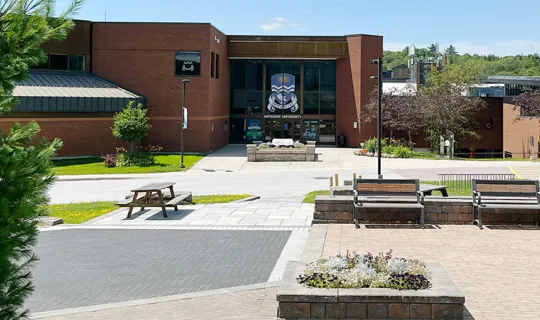
Welcome to the Faculty of Education and Professional Studies
Build the skills, experience, and connections you need for a meaningful career in Education and Professional Studies.
- Career-focused programs with hands-on learning.
- Small classes and personalized support from experienced faculty.
- Real-world experience through placements, internships, and applied research.
- A supportive learning environment that prepares you for what comes next
Future Students
Schools in our faculty
- School of Business
- School of Criminal Justice
- Schulich School of Education
- School of Nursing
- School of Physical & Health Education
- School of Social Work
Available certificates & minors
- Undergraduate Application Guide
- Undergraduate Admission and Application Portal for:


Current Students Program Resources
-
Business and Commerce Programs
Check the School of Business "Resources" tab to find of the resources for the Business Administration program and all the Commerce programs.
-
Education - Concurrent or Consecutive
Check the Schulich School of Education "Resources" tab to find of the resources for both Education programs
-
Nursing
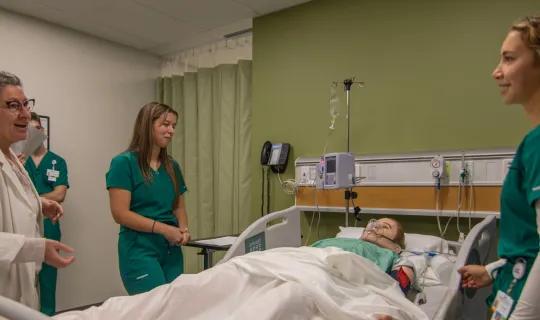
Check the School of Nursing "Resources" tab to find of the resources for all the Nursing programs
Our flexible placement program provides practical experience within the profession, including placements with jails, police services, victim services, and more.
Research Assistant opportunities with professors and the fourth-year thesis course are available and offer you even more opportunities to deepen your knowledge and its practical applications by allowing you to conduct in-depth research on issues in the Criminal Justice field.
Alpha Phi Sigma
In March 2011, Nipissing’s Criminal Justice program had the honour of becoming the first Canadian Chapter of the American National Criminal Justice Honor Society (ANCJHS), which recognizes academic excellence of undergraduate students of Criminal Justice, as well as Juris Doctorate students. The goals are to honour and promote academic excellence, community service, educational leadership, and unity. In the United States, there are now over 360 chapters. Nipissing’s chapter, Mu Kappa, strives to promote the goals of the ANCJHS through community service in conjunction with local Criminal Justice agencies. Nipissing students who have completed three Criminal Justice courses with an average over 75% will be invited to join Mu Kappa.
The Criminal Justice Student Association
The Criminal Justice Student Association is student run organization that provides Nipissing University Criminal Justice students with a forum for the discussion of criminal justice issues, as well as opportunities to learn about careers available to them upon graduation, within the CJ system and beyond. The CJSA also helps to foster collegiality among criminal justice students in order to enhance their student experience within the classroom, as well as their overall social experience while attending Nipissing University. To connect and learn more about what is going on with the CJSA, Like us on Facebook!
More Resources
- Canadian Correctional System Overview
- Canadian Correctional System Overview (French)
- Graduate School Application Process: A guide for students considering a Criminology/Legal Studies Master's degree or a Law degree.
- Graduate Programs Relevant to Criminal Justice and Law Schools in Canada: A list of schools offering graduate programs.
Nipissing University Physical and Health Education Students (NUPHES)
Our BPHE students (NUPHES) are active not only within the Nipissing University community but also within the North Bay community.
Community Leadership Placement
The Community Leadership Placement is a non-paid work experience in an approved community setting that complements course work, previous experience, and future goals. The placement is founded on a model of community-based learning as an instrument of experiential education. It is an engaging opportunity for students to combine active learning with current community concerns. The community collaboration allows all to take advantage of each group’s strength so student learning is enriched and organizational objectives are met. You have the power to provide real-life experience that connects today’s students to their community and to inspire them to become tomorrow’s leaders.
Information for Students:
- Students involved in community leadership placements around North America report positive growth in such areas as critical thinking, communication, and conflict resolution skills, sensitivity to diversity, and exposure to professional opportunities to help determine future goals.
- Your placement advisor is Jennifer Buell, 705.474.3450 ext. 4896, Office: AC201-A.
- Read more Community Leadership Placement information
Information for Hosts:
- Placements are an exciting opportunity for hosts to address a true organizational need while contributing to the education of young people in their field. As a new program, we strive to constantly improve and seek feedback from active partners. Please take the time to read through the material below and if you still have questions or concerns do not hesitate to contact the BPHE Placement Office.
- You can find more information in our Advisor Handbook.
- Your placement advisor is Jennifer Buell, 705.474.3450 ext. 4896, Office: AC201-A
- Read more Community Leadership Placement information
Facilities and Research Centres
Learn more about the interdisciplinary research taking place in our research centres and groups.
Dean's welcome, Contact us, Resources, Policies & Regulations, FAQs
Welcome from the Dean of Education & Professional Studies
Welcome to the Faculty of Education and Professional Studies!

This Faculty includes the Schulich School of Education and the Schools of Business, Criminal Justice, Nursing, Physical and Health Education, and Social Work.
Our internationally-recognized faculty members also contribute to the following graduate programs: Master of Education, Doctor of Philosophy in Educational Sustainability, and Master of Science in Kinesiology. You will find more details on those and other graduate programs on the School of Graduate Studies page.
I wish to acknowledge that Nipissing University sits on the territory of Nipissing First Nation, the territory of the Anishnabek, within lands protected by the Robinson-Huron Treaty of 1850. We are grateful to gather, live, and learn on these lands with all our relations.
As Dean of the Faculty of Education and Professional Studies, I am proud of our outstanding professors, students, staff, and facilities. Our faculty have a long history of excellence in education and research, for which many have been recognized through national and international awards. Our students have rich opportunities to learn from these scholars and to apply that knowledge in real-world settings.
I look forward to supporting our students, staff, and faculty this year, and helping make the Nipissing experience the best it can be.
Sincerely,
Dr. Graydon Raymer
Dean, Faculty of Education and Professional Studies
Dean
-
Dean, Professor
Faculty of Education and Professional Studies, Physical and Health Education, Kinesiology, MSc- 705-474-3450 Ext. 4449
- graydonr@nipissingu.ca
- Not provided

Administration
-
Manager, Education & Professional Studies
Faculty of Education and Professional Studies- 705-474-3450 Ext. 4278
- margaris@nipissingu.ca
- Not provided
-
Manager, Education & Professional Studies
Faculty of Education and Professional Studies- 705-474-3450 Ext. 4264
- saraht@nipissingu.ca
- Not provided

Staff
-
Practicum Coordinator
Faculty of Education and Professional Studies- 705-474-3450 Ext. 4910
- stephaniey@nipissingu.ca
- Not provided
Resources
Experiential Learning and Research Opportunities
- UNIV 3006 Experiential Learning for Arts and Science Students: Third and fourth year Arts and Science Students will be interested in this 3 credit course. Within this course, academic assignments and at least 60 hours of placement in the community within a field that is related to your course of study is offered.
- Undergraduate Research Conference: The annual Undergraduate Research Conference allows eligible students who have led a scholarly project to present their work and gain experience, with opportunities to also work as a Research Assistant.
- Record of Student Development: The Record of Student Development (RSD) lets students gain and showcase real-world skills like communication, teamwork, problem-solving, and a strong work ethic that employers value. To register and see the full list of RSD competencies visit www.nipissingu.ca/rsd
Get Involved on Campus
- Nipissing University Student Union (NUSU): Students attending Nipissing University in North Bay and long distance students are members of the Nipissing University Student Union. Our organization strives to represent students democratically, provide a communication framework, and lobby for legislative change on issues that affect students.
- Lakers Athletics
- Intramural Sports: Nipissing’s Athletics Department offers a wide range of intramural activities to keep you on your game
- Lakers Club Sports: Club sports are available to all Nipissing students and are both recreational and competitive.
- Varsity Sports: Go Lakers! Our varsity athletes always bring their “A” game. Get your friends together and come out to cheer on your favourite teams.
- RJ Surtees Athletic Centre: Whether you are a gym enthusiast or a weekend warrior, Nipissing has just what you need.
Language Testing Options
French Language Placement Test
- Please note that the French Placement Test is no longer a requirement to register in French courses as of 21FW.
- If you wish to enrol in FREN-1106 Introductory French I and have no knowledge of French, you are encouraged to contact the Dean's Office at asdean@nipissingu.ca to seek permission. If approved, the Dean's Office will inform the Office of the Registrar and you will be notified that you can proceed with registering for Introductory French I.
- It is strongly recommended that students enrolling in the French Minor at Nipissing University with grade 12 core French enrol in FREN-1106 Introductory French I, while those who have graduated from a French immersion or fully French secondary school enrol in FREN-2006 Intermediate French I.
- If you wish to enrol in FREN-2006 Intermediate French I and have not completed Introductory French, you are encouraged to contact the Dean's Office at asdean@nipissingu.ca to request exemption from this prerequisite requirement. If approved, the Dean's Office will inform the Office of the Registrar and you will be notified that you can proceed with registering for Intermediate French.
Certificate of Bilingualism
- Students of Nipissing University are eligible for a Certificate of Bilingualism if they demonstrate superior ability in French and English.
- Please note: You must be in your graduating year to take this test.
- Application Deadline: Friday, October 31st, 2026
- Written Examination: TBA
- Oral Examination: TBA
- There is a fee of $45 to write this test.
- Application forms are available through the Dean of Arts and Science Office at asdeanoffice@nipissingu.ca
Academic Policies and Regulations
The following is a list of student related Academic Polices and Regulations as approved by Academic Senate.
- Academic Dishonesty Policy
- Attendance
- Course Waiting List Policy
- Evaluation and Grading System
- Final Examinations
- Religious Accommodation Policy
- Appeals and Petitions
General University Policies
Have a question?
Browse our most frequently asked questions and answers.
Course Info & Structure
If you'd like to contact your instructor, you can use email or you can contact them directly through Blackboard.
Some individuals find that online courses fit better with their personal learning style, and others do not. Online courses share the same academic calendar description and credit value as on-campus courses, and must meet the same expectations of academic rigor.
Whether the course is online or on-campus, you should keep copies of all material you hand in for a class.
All credits for courses completed online are treated in the same manner as on-campus credits. The same rules for transfer apply. Please contact the Registrar’s Office for information.
All online courses follow the academic semester which is twelve weeks of course time, plus a study break week. Exams are written in a two-week block after the end of the course. Your total time commitment spans approximately 15 weeks.
Unless enrolled in a synchronous course, you are not required to be online at any specific time during the week. Certain courses may offer opportunities for everyone to meet online. These sessions are usually recorded, and the recording will be available for all students for review.
- The online instructor and students interact in a “real time” and interactive mode. Students enrolled in a synchronous course are required to log onto their computer (in a quiet space with a good Internet connection) during a specific set time every week just as if they had to be in a physical classroom setting.
- You will need a headset or speakers to hear your professor speak, and it is beneficial to have a microphone, as this will enable you to ask questions and interact.
- Please note that attendance will be taken during these sessions, so you are expected to be present every week.
Instructors encourage student to student interaction in their online courses, including discussions and group work. All courses will involve some independent work.
A list of current online offerings can be found by logging into WebAdvisor and selecting "Search for classes (no login required)" under the Students menu.
Select the term you wish to view, the subject you're interested in taking. For the location, please select "Distance Learning".
While this varies from student to student, one can expect to spend approximately ten hours per week of study and preparation for each three-credit online course. You may contact your course instructor for an estimate based on the course material.
Nipissing University uses Blackboard Learn. If you are new to Blackboard, you may wish to view the online tutorials posted here.
A note about Discussion Boards: Many courses use discussion boards in order to promote discussion of various course related topics. Postings to the discussion boards are public within the course; therefore, students should not post personal requests (such as assignment extension requests) in these areas. Discussion boards are an effective way to explore course-related materials with the instructor and all classmates.
You will need to purchase textbooks and course materials through the campus shop or an independent retailer. Be sure to do this right away, as you will need these resources for your studies. You will find the required textbooks and course materials listed in your course syllabus in Blackboard. Textbooks and course packs can be purchased at the Nipissing University Campus Shop and are also listed on the Campus shop website.
College Partnership Program students: you can also purchase your CPP course textbooks through your college campus Bookstore. For a complete list of CPP textbooks, please visit the College Partnership Textbook Listing website.
Nipissing University issues an e-mail account to all students, faculty members and instructors. This account is accessed through the Nipissing University portal which is password protected and requires a username to login.
It is Nipissing University’s policy to send all official communication to your Nipissing University e-mail accounts. It is your responsibility to check your email in a timely manner.
Failure to read communications sent to the University e-mail address in a timely manner does not absolve you from knowing, responding to, or complying with the content of these communications.
If you have questions regarding course material, please contact your instructor. Technical issues can be sent to techsrv@nipissingu.ca, or by phone 705.474.3450 ext. 4342.
For any other issues or concerns please contact apsaltdelivery@nipissingu.ca or margaris@nipissingu.ca in the Dean’s office, or by phoning 705.474.3450 ext. 4643 or 4278, and we will be happy to assist you.
Registration & Course Codes
Typically, registration for Fall/Winter courses opens in June while registration for Spring/Summer courses opens in March. The Registrar’s office sends out a registration reminder to inform students when they can begin to register for courses.
For a list of important dates please refer to the Registrar’s Office website.
Registration for online courses takes place through Nipissing University's WebAdvisor system. Step by step instructions regarding how to enroll in courses can be found on the Registrar’s Office website.
Each course is identified by a four-letter code, referring to the subject, followed by a four number code, referring to the course.
The next two digits refer to the semester:
FA refers to Fall, which runs from September through to December.
WI refers to Winter, which runs from January through to April.
FW refers to Fall/Winter, which runs from September through to April.
SS refers to Spring/Summer, which runs from May through to August.
The next three digits refer to the section:
Section codes 801 to 819 and 881 are online courses. Students are not required to meet or attend lectures in person, unless the course is a clinical course. Students are required to attend a proctored examination.
Section codes 821 to 829 are blended courses. Students are required to meet once per week for a facilitated session. Complete information regarding meeting locations, dates, and times can be obtained from the academic department offering the course.
Section codes 841 to 849 are synchronous courses. Students are required to meet once per week online, using Blackboard Collaborate, for a facilitated session. Complete information regarding meeting dates and times are scheduled and can be viewed in WebAdvisor.
Students will have access to their courses in Blackboard two (2) days prior to the start of classes. Adding a course in WebAdvisor does not automatically update records in Blackboard. It will take a day or two for Blackboard to reflect the changes.
Technology & Skills
If your course uses synchronous meetings, you will need a headset and microphone connected to your computer to fully participate. For all other technological requirements, please visit the Technology Services FAQ website.
At this time, mobile devices cannot be used to completely participate in a course. Mobile devices can be used to view most of your online course, but there may be items such as videos and animations that a mobile device cannot support.
You should be familiar with the use of a web browser (such as Safari, Firefox or Internet Explorer) and a word processing program (such as Microsoft Word). Some courses may require you to prepare spreadsheets, so you will need a spreadsheet creation program (such as Microsoft Excel).
Exams, Grades and Degree Completion
Tests and quizzes are run completely online through Blackboard.
The majority of courses offered at a distance include a three-hour invigilated final examination. Exam details (date, time, location) are made available online via WebAdvisor approximately four weeks prior to the exam period.
For more information about final exams please contact the Registrar’s Office.
Any student who is unable to write a final examination as originally scheduled, due to illness or other circumstances beyond their control, may, on application, be granted permission to write a special final examination. Requests for special examinations must be accompanied by supporting documentation, when appropriate i.e. doctor’s notes. All initial decisions of the approval of a special examination or location change will be processed through the Dean’s office. To request a special examination, complete the Exam Change Request Form.
Further information regarding special examinations can be found in the “Academic Regulations / Information” section of the current Nipissing University Academic Calendar.
All in-person final exams for online courses are located at our campus in North Bay, Ontario.
If you wish to complete your exam(s) at a location outside of North Bay, you must submit a Distance Exam Request Form to the Office of the Registrar after your final exam schedule has been posted for each session. You would be responsible for booking any such exams at an approved testing centre near you at your own expense. You must book your distance exam on the same date as the exam taking place in North Bay for your course(s) and ensure that your completed Distance Exam Request form is submitted to the Office of the Registrar at distance_exams@nipissingu.ca at least 4 weeks prior to the start of the exam period. Further details regarding this process and any applicable deadlines will be sent to your Nipissing University student email account each semester at least eight weeks prior to the final exam period.
There is no set time frame in which you must complete your degree. Some students take one or two courses a semester, while others may take four or five.
Be aware, however, that if you choose not to enroll in courses for one academic year (12 months), you will be required to reapply to the program. Please contact Academic Advising for more information.
Support and Financial Aid
Information about financial aid, including eligibility and contact information, can be found on the Student Awards and Financial Aid website.
The Academic Skills Program coordinates services that support all Nipissing University students in developing the fundamental skills to achieve academic success. These services include direct meetings with an Academic Skills Coordinator via face-to-face meeting, phone call, or video conferencing soft-ware; the Academic Skills Drop-In Centre; and the Peer Tutoring Program.
More information on each of the initiatives of the Academic Skills Program as well as diagnostic resources can be accessed online at the link provided below.
Phone: 705.474.3450 ext. 4459
E-mail: acaskills@nipissingu.ca
Website: www.nipissingu.ca/academicskills
Personal counselling services are available through the Office of Student Development and Services during the academic year. Confidential, individualized counseling support is available at no cost to all students at Nipissing University.
Counselling can also be accessed by students who are off campus through exchange, co-operative education, placement, or distance learning via e-counseling sessions.
Phone: 705.474.3450 ext. 4507
E-mail: counselling@nipissingu.ca
Website: www.nipissingu.ca/counselling