
Welcome to the Community Leadership Placement (CLP) Program
The CLP is an integral part of Nipissing University's Bachelor of Physical and Health Education. Students are required to complete both PHED 3106 and PHED 4106 courses, which grant them the opportunity of completing a combined total of 100+ hours of community based work placement in areas that complement their personal, academic and professional goals. Students benefit from two placement opportunities in the PHED program through PHED 3106, PHED 4106, or PHED 4606. These courses are offered during the academic year and the spring/summer term.
Spring/Summer 2026 Placement
An overview of the PHED Placement Program for students:
Students are encouraged to review the current placement opportunities listed and connect with the PHED Placement Office if they wish to be considered for a role.
PHED Placement Directory (Fall/Winter)
All students participating in PHED placements must obtain and maintain specific credentials. Meeting the clearance protocol means your documents have been submitted and verified by the PHED Placement Office prior to the deadline specified in your course outline.
Students registered in PHED 4106 must complete the form below
Alternatively, students may self-initiate a placement. A placement arranged between a student and a placement host is not an approved placement until it has been reviewed by the Placement Officer and notification has been received to move forward.
Students who choose to self-initiate a placement must ensure the proposed placement meets the following guidelines:
- The placement meets academic and career goals.
- The scope of the role and associated responsibilities are appropriate for the level of study.
- Placement host contact information is available.
- The placement host is an acceptable mentor, available to guide and support the student throughout the 50-hour requirement.
- The placement host is not immediately related to the student.
- The placement is an unpaid position.
- The student is not employed, and has not been employed, with the proposed placement location.
- The student has not already completed a placement with the proposed agency or group — unless there is clear evidence the opportunity will be a new or different experience allowing the student to gain additional competencies.
- The placement demonstrates a benefit not only to the student, but to the community in fulfilling a true organizational need.
Placements can only begin once Clearance Documents, Request Forms, and Agreement Forms have been submitted and reviewed. A confirmation email from the Placement Officer confirming documentation completion will be sent to the student and Placement Host. Once that email has been sent, placement involvement can begin. Any hours completed prior to receiving confirmation from the Placement Officer will not count toward the 50-hour requirement.
Placements are not finalized until Request Forms are submitted to the coordinator for review and have been approved. Access the Self-Initiating Guide, which outlines best practices.
Students proposing a placement must connect with their proposed host to complete the Host Request Form below.
The form includes a brief outline of the anticipated placement role, along with a space for hosts to name a specific student in mind for the position. Once received by email, the placement office will reach out to each host to confirm the details stated on the form.
If an appropriate match with one of our students is made, Placement Hosts will be asked to complete the CLP Evaluation Form once the student has completed the 50-hour requirement.
The Placement Partner Handbook below contains important information for placement hosts regarding the expectations of both student and host.
Once a placement has been approved by the Placement Coordinator, the student and supervising host will be instructed to complete the agreement form below
This form also summarizes the main duties and responsibilities of both the student and host, and it is trusted that all expectations will be reviewed thoroughly.
Students may request to be assigned to an in-person or virtual placement listed within the PHED placement directory. In-person placements assigned by the Community Placement Officer take place within the City of North Bay and are accessible by city transit (bus). The experiential learning projects students participate in during their placement are assigned by the PHED Placement Officer and are based on several criteria, including student requests and the availability of hosts. All in-person placements follow the recommended health and safety measures outlined by the Ontario government in response to COVID-19.
Students and Placement Hosts are responsible for ensuring the 50 hours of work placement is achieved.
The Time Tracking Sheet above assists in monitoring placement progress and is to be submitted to the Placement Coordinator upon completion.
Experiential Learning programs provide students with accelerated learning and opportunity to immediately apply knowledge which leads to sustained skills and understanding. Through relevant connections and strong supports, students learn through the reflection of “doing”, increasing professional competencies, and ultimately improving future job opportunities.
The benefits of Community-Based Learning are abundant. This model of learning is becoming more prominent in Canadian education and is being researched and developed on an ongoing basis. Here are a few benefits that some of our partners are reporting:
- Increased feelings of self-efficacy
- Integration of class theory
- Increased problem solving, planning and communication skills
- Improved team work
- Clarity about career goals
- Increased community engagement
- Increased academic achievement and interest in education
- Improved employment opportunities
- Help prioritize services and fulfill true organizational need
- Cost effective business practice
- Increased staff diversity
- Partnership with University
- Input into student teachings
- Volunteer and/or employee recruitment
- Increased student retention through engaged learners
- Expanded program mission and values
- Access to current ideas and energy/enthusiasm in the field
- Increased community partnership and visibility
- Enhanced quality of graduates
- Increased quality of education and service to community members
- Resource sharing
- Production of responsible citizens
- Increase preparedness of university graduates
EXPERIENTIAL LEARNING in its simplest form is described as, “learning through experience or learning by doing. Experiential education first immerses learners in an experience and then encourages reflection about the experience to develop new skills, new attitudes, or new ways of thinking” (Lewis and Williams, 1994).
Educational theorist David Kolb (1984) defines experiential learning as, “being actively involved in an experience, reflecting on the experience, conceptualizing the experience, and using what you have learned to make decisions and problem solve in order to apply new ideas gained from the experience.” He believes, “learning is the process whereby knowledge is created through the transformation of experience”.
Experiential learning allows students to participate in educational opportunities directly related to their academic area of study creating meaningful connections, opportunity for reflection and the development of sustainable skill sets and knowledge.
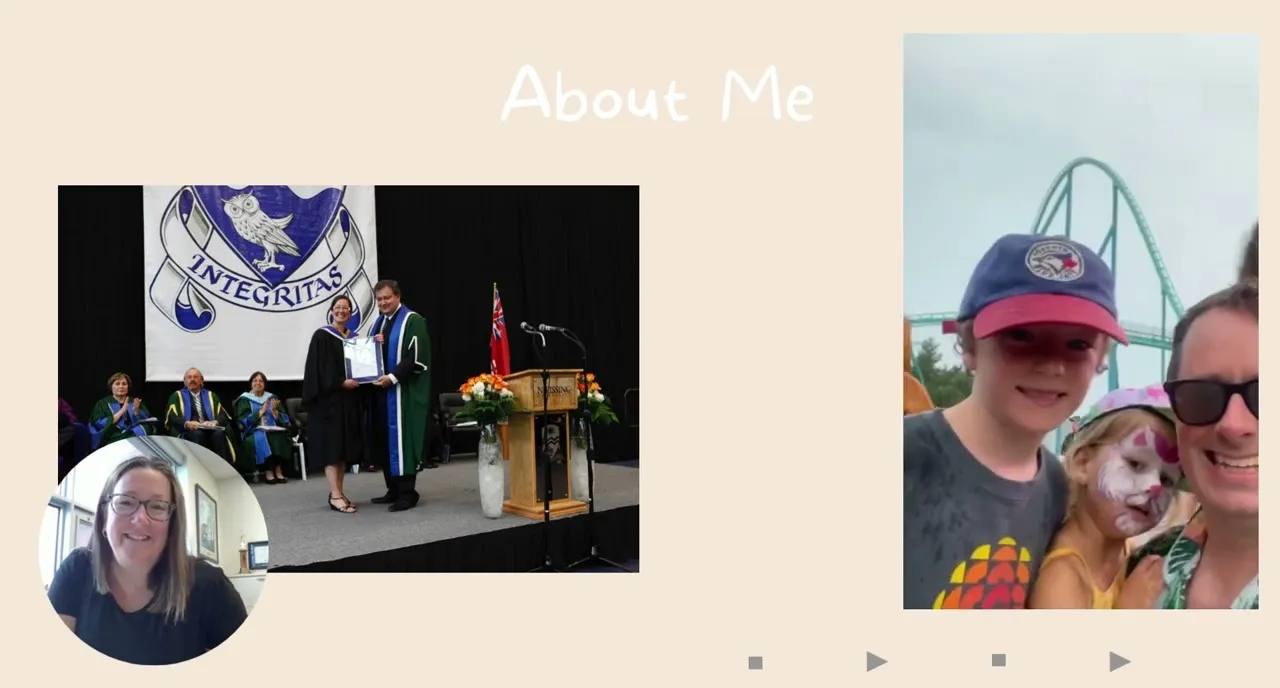
A welcome message from Jennifer Buell, Placement Officer for the School of Physical and Health Education.
Jennifer Buell (she/her), BPHE (Hons)
Placement Officer, School of Physical and Health Education
Nipissing University
201A, Centre for Physical and Health Education
Tel: (705) 474-3461 ext. 4896
Web: clp.nipissingu.ca
Chat: MS Teams
Frequently Asked Questions
In the event of work stoppage the agreement to supervise may be suspended until the concern is resolved. This is true of stoppages originating from the university staff or the community partners staff. Students are unable to work towards completing placement hours during this time. For work stoppages resulting from direction from public health, such as the shut downs experienced through the COVID-19 pandemic, specific guidance will be provided to students in alignment with university policy.
PHED 3106 and PHED 4106 students must have the following certifications on file, details can be found on your Course Outlines. It is important to note that this list is not exhaustive and students may be required to provide other documentation and/or participate in training sessions outlined by their placement supervisors.
- Vulnerable Sector Police Check
- Standard First Aid and CPR Level C (only if requested by Placement Host)
- Worker Health and Safety Awareness
- Proof of Concussion Education
In short, no. It is important that students and placement hosts recognize that there are administrative policies, and liability responsibilities we must adhere to for the protection of all stakeholders. Clearance documents are a must, and under no circumstance will a student be approved in any placement involvement until all documents are received successfully.
Students entering into PHED 3106 must provide an original Police/Vulnerable Sector Check (PVSC) that has been completed within 12 months of the course start date. Students can obtain a requisition for a police check by contacting the Physical and Health Education Placement Officer, which may be requested by certain jurisdictions and may assist in speeding up the process.
Students entering into PHED 4106 will be required to sign an Offense Declaration; however, in the event that their PVSC is not on file or older than 3 years it will be their responsibility to obtain an new one for their course. Costs associated with obtaining the document are to be borne by the applicant.
The BPHE program will accept PVSCs that are dated within 12 months of the course start date for PHED 3106 and a signed Offense Declaration for PHED 4106; however, should your placement host require more recent documentation then you will be required to provide one prior to any placement involvement.
There are two required placement courses in the Bachelor of Physical and Health Education degree. These courses are referred to as Community Leadership Placements (CLP). The associated course codes are PHED 3106 and PHED 4106.
Combined, students will have the opportunity to complete 100+ hours of work placement. PHED 3106 is a prerequisite to PHED 4106.
Not necessarily; PHED 3106 and PHED 4106 are full year courses, and students are expected to be available for sessions and placement throughout the entire 23 week period. Many of the assigned placements span the academic year. This means, if a student were to register in the winter section, the majority of their experiential learning project commitment (or placement hours) could take place in the fall or vice versa.
Contact Us
Director
-
Director, Professor
Physical and Health Education, Kinesiology, MSc

Staff
-
Physical & Health Education Placement Officer
Physical and Health Education- 705-474-3450 Ext. 4896
- jenniferb@nipissingu.ca
- Not provided
-
Laboratory Technologist
Physical and Health Education -
Research Assistant
Physical and Health Education- Not provided
- samanthp@nipissingu.ca
- Not provided
-
Physical and Health Education Laboratory Technologist
Physical and Health Education- 705-474-3450 Ext. 4902
- laurasno@nipissingu.ca
- Not provided

