
Enji giigdoyang

Ahnii, Boozhoo, Wachay, Sago, Taansi!
We welcome Indigenous students, their families, and communities within inclusive programs in Enji giigdoyang, the Office of Indigenous Initiatives.
In the Nbisiing dialect of Anishinaabemowin, Enji giigdoyang means "where we come to meet, discuss and talk about things," which is the culture we hope to foster.

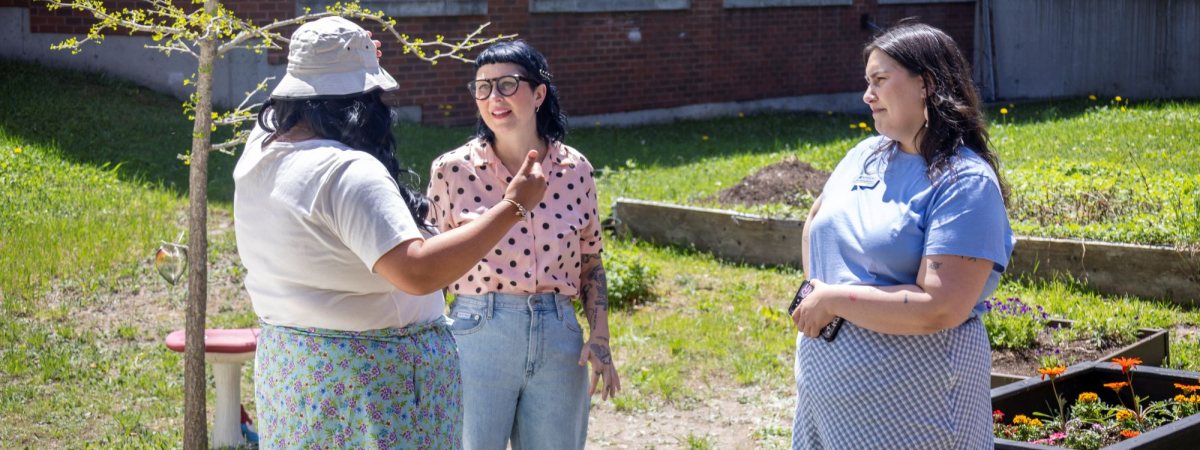
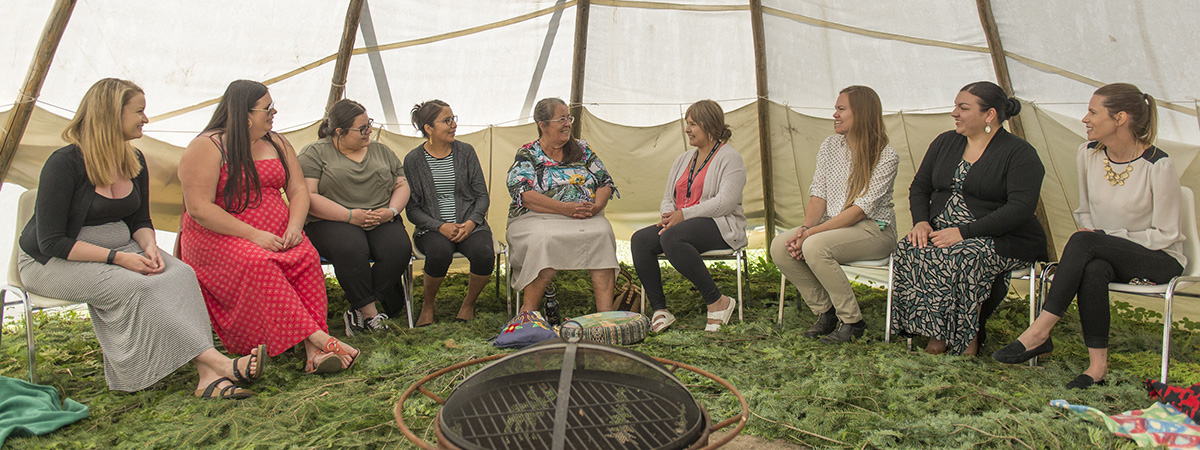
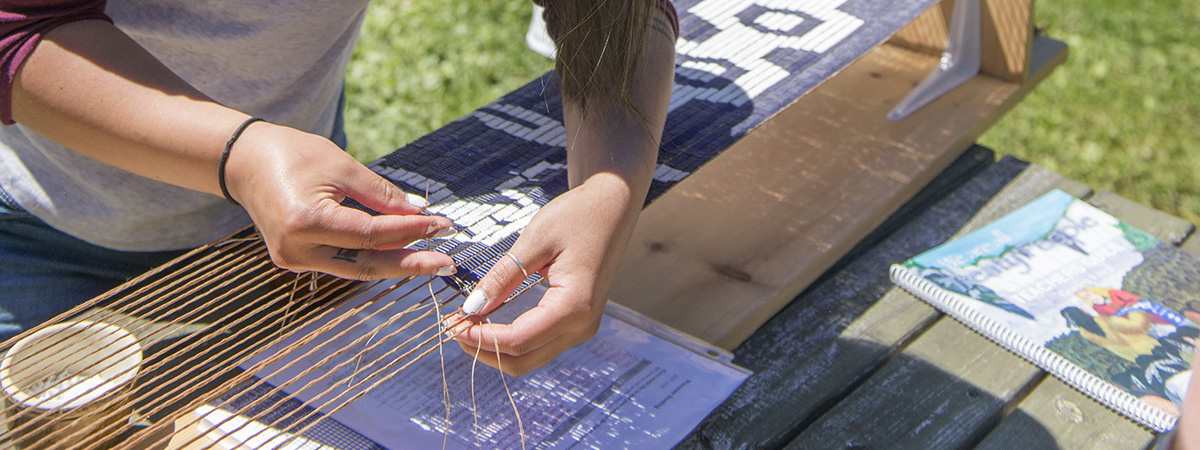

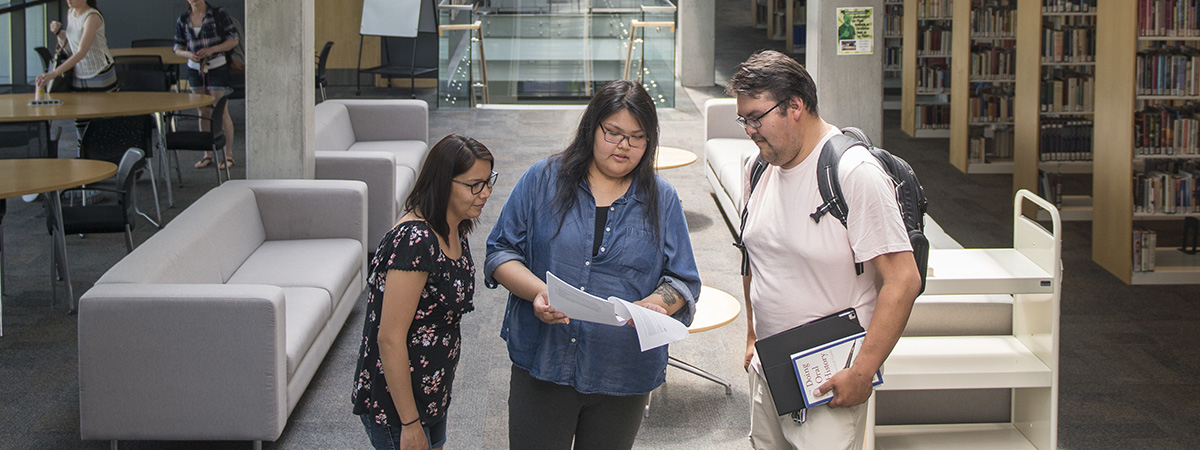
- We enhance the educational experience through a holistic approach to student success and wellness.
- We provide a variety of academic, personal, and cultural supports rooted in Indigenous culture and worldview.
- We honour one another's life experiences and invite you to connect with our campus community and guests of the university during workshops and events on campus.
- We also offer ongoing volunteer opportunities, experiential learning, cultural activities, academic workshops, financial support, tutoring, and peer mentorship for Indigenous students as they navigate the university.
Future Students
For admission requirements and application instructions, please visit each program page.
Debwendizon Indigenous Youth Education Gathering
Indigenous youth from northern secondary schools visit campus to learn about university life from students, faculty and staff. We hope that you will join us!
Indigenous Student Success
Academic, personal, and cultural programs and services including application support, volunteer opportunities, experiential learning opportunities, cultural activities, academic workshops, financial support, and peer tutoring.
Current Students
Peer Tutors
The Office of Indigenous Initiatives offers general academic skill assistance through peer tutoring at no cost. Tutors are available to meet with students during scheduled drop-in times, one-on-one appointments and academic skill building workshops.
To connect with a tutor, please submit your request by
Email: biindgen@nipissingu.ca
MS Teams: Virtual Enji giigdoyang Student Lounge
Wiidooktaadwin is an Anishinaabe word that means "helping one another."
The Office of Indigenous Initiatives offers 2 mentorship programs:
- Peer2Peer mentorship with Nipissing University student mentees
- WIMI with secondary school students in area high schools.
Peer2Peer Indigenous Mentorship connects upper year Indigenous Nipissing University students with Indigenous students that are newer to post-secondary education, and/or are looking for additional resources and supports. The program provides cultural support for participants and helps create a network in which all participants can build relationships with one another. Peer2Peer promotes the development of leadership skills and builds community. It is also a great way for students to meet new people.
- Mentors: Upper-year Indigenous Nipissing University student employees and volunteers who contribute to making our OII student lounge a welcoming space for all
More details about Mentors - Mentees: Becoming an Indigenous student mentee is a great way to meet new people and get involved with OII, plus it can lead to future student job opportunities!.
More details about Mentees
Student Employment Opportunities
There are many opportunities for on-campus employment at Nipissing University. An on-campus job can be a convenient way to gain valuable work experience and make some money while completing your degree. Explore Nipissing University's Employment Opportunities section for more information.
Volunteer Opportunities
Biidaaban Academic Support (Tutor Indigenous youth in grades 1 grade 12)
Peer2PeerMentorship (Opportunity for upper year students to mentor new students)
Indigenous Self-Identification
At Nipissing University, students of Indigenous cultural and/or ancestral background can choose to self-identify through a voluntary and confidential online process. By doing so, students connect to the on-campus Indigenous student community and have increased access to information about specialized programs and services. Students can engage with this process by accessing their student account on WebAdvisor. Information can added or removed at any time.
Indigenous Student Success
Academic, personal, and cultural programs and services including application support, volunteer opportunities, experiential learning opportunities, cultural activities, academic workshops, financial support, and peer tutoring.
Events
Enji giigoyang, the Office of Indigenous Initiatives, organizes Indigenous Week and the Enji giigdoyang Speaker Series annually with talks, workshops, and film screenings by Indigenous knowledge holders, professionals, writers, scholars, artists, and filmmakers. We also partner with academic departments on campus and organizations in the community to co-present some events each year.
See Nipissing University Events Calendar
Between 2013 and 2020, Nipissing University and the Office of Indigenous Initiatives welcomed distinguished scholars, professionals, artists, and community leaders to speak on campus in partnership with multiple community organizations. Due to Covid-19, various events were held virtually between 2020-2021. Highlights include:
- 2021 - Medicine Wheel Teaching with Jennifer Wabano, Nbisiing Knowledge Holder
- 2021 - Indigenous Peoples Day Event with Knowledge Holder Leona Stevens
- 2020 - Orange Shirt Day, an Annual Day of Remembrance of Residential Schools
- 2019 - Interactive Reading of the novel, Moon of the Crusted Snow, with author Waubgeshig Rice, Wasauksing First Nation. Keynote for the Undergraduate Research Conference
- 2019 - Wampum Teaching with Brenda Lee, Indigenous Knowledge Holder
- 2019 - "National Day of Remembrance and Action on Violence Against Women" with Elder Carol Guppy and the Sexual Violence Prevention Outreach Team.
- 2016 - “Reflections on the Royal Commission on Aboriginal Peoples, 20 Years Later” with Dr. Marlene Brant-Castellano, Co-Director of Research, RCAP, Dr. Frederic Wein, Deputy Director of Research, RCAP, and with Dr. Mike DeGagné, President and Vice-Chancellor, Nipissing University
- 2016 - “Unraveling Community in Indigenous-University Research Collaborations” by Indigenous Scholar-in-Residence, Dr. Shauneen Pete, Executive Lead of Indigenization and Faculty of Education, University of Regina, as Keynote for Centre for Interdisciplinary Collaboration in the Arts and Science series
- 2016 - “Reading Birdie as the Letter of the Law: Canadian Fictions and Indigenous Truths” with Dr. Tracy Lindberg, author of Canada Reads 2016 Shortlisted novel, Birdie, and Faculty, University of Ottawa, as Keynote for International Women’s Week
- 2016 - “Reconciliation in Ontario” with Maurice Switzer, member of the Ontario Human Rights Commission, and David Zimmer, the Minister of Indigenous Relations and Reconciliation for Ontario
- 2016 - Launch of RBC Treaty Learning Centre at Nipissing University
- 2016 - Launch of Reconciliation North Bay with June Commanda, Elder of Nipissing First Nation, Dr. Mike DeGagné, President and Vice Chancellor of Nipissing University, and Dakota Heon, student at Nipissing University
- 2016 - “Indigenous Education and the Way Forward” with Governor General David Johnston, student speaker Autumn Varley, Dr. Katrina Srigley, and Clint Davis, Chair of the Board of Directors for the Nunatsiavut Group as part of The KaNaTa Conversations
- 2015 - “Up Ghost River and Issues in the Independent Assessment Process” with author Edmund Metatawabin, co-sponsored by the Aboriginal Student Council and the Office of Indigenous Initiatives
- 2015 - “Closing the Gap: A New Era for First Nations in Canada” Lecture by Perry Bellegarde, National Chief, Assembly of First Nations
- 2014 - “Ethical Research Relationships with Indigenous Peoples” co-presented with Dr. Katrina Srigley, Nipissing University and Glenna Beaucage, Nipissing First Nation (regarding the Nipissing Warriors Project)
- 2014 - “Ethics of Research Involving Indigenous Peoples and Communities” with Dr. Marlene Brant-Castellano, Professor Emeritus, Trent University
- 2013 - The KaNaTa Conversations, “Engaging in Change: Reflections and Strategies on First Nations-Canada Relations” in partnership with the Assembly of First Nations and Shawn Atleo, Hereditary Chief of the Ahousaht First Nation and former Nation Chief of the Assembly of First Nation in Canada
- 2018 - “Anishinabek Child Well-Being Law Implementation” with Adrienne Pelletier
- 2018 - “My Role in the Relationships with Ininiimowin (Cree Language) and Tipaachimowin (Story) ” with Lorraine Sutherland
- 2017 - “She Speaks Alongside the Water: Environmental Panel” with Autumn Peltier, Dr. Carly Dokis, Paige Restoule and Stephanie Peltier with an opening by Carol Guppy for Treaties Recognition Week in Ontario
- 2017 - “The Significance of Treaty Today” with Fred Bellefeuille
- 2017 - “Beyond Canada 150” with Maurice Switzer, Alderville First Nation and member of the Ontario Human Rights Commission
- 2017 - “Curatorial Talk: Inviting Materials” with curator, Lisa Myers
- 2017 - “Freedom Sings: Land/Bodies/Resurgence” with Dr. Leanne Simpson, Michi Saagiig Nishnaabeg scholar, writer and artist of Alderville First Nation
- 2017 - Dibaadan Motivational Guest Speaker Sid Bobb, Co-Artistic Director of Big Medicine Studio
- 2017 - “BLACKBEAR” Warrant Officer Sheldon Quinn, First Nations and the Canadian Armed Forces
- 2016 - “Anishnaabe Mino-Biimaadiziwin: A Traditional Model of Teaching and Learning in the Academy” with Dr. Renee Bedard, Nipissing University
- 2016 - Wampum Teachings with Maurice Switzer, Alderville First Nation and Ken Maracle, distinguished Indigenous knowledge holder
- 2016 - “Two-eyed Seeing, Wise Practices in Indigenous Health Research and Application for Indigenization” with Dr. Cindy Peltier, Nipissing University
- 2014 - “Time for Reflection” with Sid Bobb, Co-Artistic Director of Big Medicine Studio
- 2014 - “Walking the Path” with George Couchie, retired officer of the Ontario Provincial Police and Nipissing First Nation member
- 2014 - “Importance of Indigenous Language” with Muriel Sawyer, Deputy Chief, Nipissing First Nation
- 2014 - “Alive with Breath” a talk with filmmaker, Jules Koostachin
- 2014 - Trick or Treaty film screening with Alanis Obamsawin, master Indigenous documentary filmmaker, at the Capitol Centre. The film was introduced by the late Dr. John Long, author and advisor to the Mushkegowuk, and was followed by a Q & A with the filmmaker.
- 2021 - Storytelling by Perry McLeod-Shabogesic, Ojibway Anishinabe from N'biising (Nipissing) First Nation
- 2021 - Traditional Teaching with Indigenous Knowledge Holder Leona Stevens and Indigenous Knowledge Holder Wes Whetung
- 2021 - "Birth of a Family" Screening and Q&A with Filmmaker Tasha Hubbard
- 2021 - Virtual Reading and Q&A with Researcher Gina Starblanket and Author Dallas Hunt
- 2019 - Traditional Teaching on Smudging by Elder Carol Guppy from Temagami
- 2019 - “The Circle is Strong: Family, Identity, and the Child Welfare System” with Nipissing Alumnus, Autumn Varley, of Kitigan Zibi Anishinabeg First Nation
- 2019 - “Treaty Foundations: The Relevance of the Covenant Chain to the Robinson Huron Treaty” with Alan Ojiig Corbiere, M’Chigeeng First Nation
- 2019 - “Acknowledging the Truth, Reconciling the Past, and Honouring Community Voices” with Dr. Jenny Kay Dupuis of Nipissing First Nation, a talk on her award-winning book I am Not a Number. She was accompanied by language speakers Dr. Muriel Sawyer, Geraldine McLeod, and Tory Fisher of Nipissing First Nation who shared their experiences translating the book from English to Nishnaabemwin
- 2018 - Holistic Support of Indigenous Students, a discussion of the Diibaadan project with Maurice Switzer, Neva Isaac, Cindy Hare and Dakota Heon facilitated by Tanya Lukin-Linklater
- 2018 - “Maggie and Me: A Healing Dance” performed by Christine Friday of Temagami First Nation followed by an artist talk
- 2018 - Traditional Teaching on Medicines with Perry McLeod-Shabogesic, Nipissing First Nation
- 2018 - Colonization Road - Film screening and talk with filmmaker, Michelle St. John.
- 2016 - “They are all Somebody’s Daughter,” a singing workshop and participatory performance with Peter Morin, artist and faculty at OCAD University
- 2016 - "A Red Girl’s Reasoning" and "Bihttos" film screening and talk with Elle-Maija Tailfeathers, award-winning filmmaker
- 2016 - Curatorial talk with Jordan Wilson, award-winning co-curator of the exhibition, ćǝsnaɁǝm, the city before the city
- 2016 - “The Treaty Right to Vote” with Maurice Switzer, member of the Ontario Human Rights Commission
- 2015 - “Building Relationships in Community Through Indigenous Research” with Dawn Lamothe, Urban Aboriginal Strategy Coordinator, and Paige Restoule, graduate student at Nipissing University
- 2015 - “Reveries of a Solitary Indian” with Associate Professor Dale Turner, Dartmouth College
- 2015 - Traditional Teaching on Smudging with elder John Sawyer, Nipping First Nation
- 2015 - Drum Workshop with Gerald McComb, Indigenous artist and Alumnus of Nipissing University
- 2015 - Beading Workshop with Brenda Lee, Indigenous artist
- 2015 - Traditional Singing with Tasheena Sarazin, Indigenous singer
- 2019 - Symposium on Indigenous Student Transition with community education panel, Indigenous student panel, a keynote by Dr. Sheila Cote-Meek and presentations by staff and administration working in Indigenous student transition
- 2018 - 6th Annual Canadian Symposium on Indigenous Teacher Education, “Maamwistoong neniizh akiin Bridging Two Worlds: Perspectives of Indigenous and non-Indigenous Pedagogies” with the following keynotes: “Anishinaabek Education System: Planning to Deliver Indigenous Education” with Kelly Crawford, Director of Education, Kinoomaadziwin Education Body, M’Chigeeng First Nation; “Anishnaabemowin Language Teachers’ Reflections on Indigenous and Western Pedagogies” with Candace Fisher (NPSCDSB), Tory Fisher (NPSCDSB), Alysha Allaire (Near North Schools), Falcon McLeod (Near North Schools) and Blair Beaucage (Nbisiing Secondary School, NFN); “Experiences in Indigenization at Canadian Universities” with Dr. Cindy Peltier, Chair of Indigenous Education, Nipissing University, Nipissing First Nation, Wikwemikong Unceded Territory, and Dr. Anna-Leah King, Chair of Indigenization, University of Regina, Wikwemikong Unceded Territory
- 2014 - Symposium on Indigenous Student Transition with a keynote by Dr. Marie Battiste, and panels with staff, faculty and elders working to support Indigenous student transition
- 2014 - Maadhookiwin - Sharing Symposium regarding the Treaty Learning Centre in partnership with Anishnabek/the Union of Ontario Indians, Nipissing First Nation and Canadore College.
Nipissing University is located in the traditional lands of Nipissing First Nation, an Anishnaabek community along the shores of Lake Nipissing, with several First Nations located within a 100 km radius.
For Community, Children & Youth
The University has built respectful and reciprocal relationships with Indigenous communities regionally through the Nipissing University Indigenous Council on Education (NUICE) which includes representation from regional First Nations, as well as Metis and urban Indigenous service organizations. They meet two or more times per year to provide guidance and advice to Nipissing University and have representation on the Nipissing University Board of Governors and Academic Senate. A representative of Nipissing First Nation is a member of the Board of Governors.
Research with Indigenous Peoples and Communities
In support of a commitment made by Nipissing University in 2010, faculty, students and staff researchers may request support from the Office of Indigenous Initiatives when their research involves Indigenous peoples and communities. The Office of Indigenous Initiatives may provide support, assistance and advice, where appropriate. The Office of Indigenous Initiatives administers a Community Engagement Plan that is submitted by researchers prior to the submission of their research ethics protocol.
Biidaaban Community Service-Learning (BCSL)
Your non-profit organization supports local community? Interested in working on projects with students from Nipissing University?
Partnerships
Nipissing University partners with First Nations, tribal councils, urban Indigenous service organizations, and community organizations locally and regionally on events, workshops, and initiatives.
Biidaaban Community Service-Learning (BCSL)
Your non-profit organization supports local community? Interested in working on projects with students from Nipissing University? Learn more.
Debwendizon Indigenous Youth Education Gathering
Indigenous youth from northern secondary schools visit campus to learn about university life from students, faculty and staff.
Biidaaban Academic Support
Tutoring program for Indigenous youth in grades 1 to 12.
Biidaaban Youth Group
After school cultural activities program for Indigenous youth grades 3, 4, 5 and 6.
Wiidoooktaadwin Indigenous Mentorship Programs
A mentorship program for Indigenous youth in six local secondary schools.
For Faculty
Territorial Acknowledgement
- The Nipissing University Indigenous Council on Education (NUICE), Academic Senate and Board of Governors have passed a land acknowledgment. Please consider adding the acknowledgement to course syllabi or your email signature.
- "As we begin this [insert event], I would like to acknowledge that we are in the territory of the Robinson-Huron Treaty of 1850 and that the land on which we gather is the Nipissing First Nation Traditional Territory and the traditional territory of the Anishnabek. We respect and are grateful to hold this event on these lands with all our relations"
Biidaaban Community Service-Learning
Learn more about the supports available for faculty who incorporate community service-learning in their course.
Research with Indigenous Peoples and Communities
In support of a commitment made by Nipissing University in 2010, faculty, students and staff researchers may request support from the Office of Indigenous Initiatives when their research involves Indigenous peoples and communities. The Office of Indigenous Initiatives may provide support, assistance and advice, where appropriate. The Office of Indigenous Initiatives administers a Community Engagement Plan that is submitted by researchers prior to the submission of their research ethics protocol.
Resources for Faculty
These resources have been gathered by our staff. Please feel free to access and share with your colleagues.

Spaces Booking & Smudging Requests
Find details on how to book the individual spaces within each accordion item
Enji giigdoyang Student Lounge (F215)
- We welcome all students into this space. It is a great place to connect with other students, peer mentors and tutors and Office of Indigenous Initiatives staff. Come use the space to study, have lunch, grab a snack or engage in social, cultural and academic activities and workshops.
- Students are welcome to use this quiet space to meet with staff and visiting Elder or to smudge.
- The purpose of the Treaty Learning Centre is to acknowledge the significant history of treaty-making between First Nations and the Crown in Canada. The statement that “We are all treaty people” acknowledges treaty-making as a foundational relationship in Canada. The Treaty Learning Centre is activated through materials and resources and knowledge shared through talks and traditional cultural teachings. It is a place of learning that values traditional cultural knowledge and oral histories of treaty-making equally with historical understandings of treaty. The Treaty Learning Centre is a space to learn about the continued significance of treaty today.
- The Treaty Learning Centre is a shared space that is managed collaboratively by Enji giigdgoyang, the Office of Indigenous Initiatives at Nipissing University and the First Peoples Centre at Canadore College.
- The Treaty Learning Center can be utilized for sharing circles, thesis defenses, teachings, research talks, and educational sessions by the campus community and invited guests.
- Smudging may take place in the Treaty Learning Center. Please also see the smudging policy.
- The space can be booked for a maximum of 3 hours at a time during library hours of operation.
Booking:
- Complete the Space Booking Form
- Bookings can also be made by contacting the Office of Indigenous Initiatives at oii.bookings@nipissingu.ca
- Key Pick Up / Return : Library Circulation Desk Only
Smudging Policy
- Approved August, 2016 by the Nipissing University Indigenous Council on Education (NUICE).
- Nipissing University recognizes that Indigenous students, faculty, staff and community engage in a variety of traditional ceremonies, including but not limited to smudging. This policy is meant to provide guidance to the university community in engaging in the traditional cultural practice of smudging on campus.
Purpose
- Nipissing University supports and respects traditional cultural ceremonies and recognizes that smudging is a form of ceremony and is therefore permitted on campus.
- The Tobacco Control Act, 1994, S.O. 1994, Chapter 13 recognizes that smudging and tobacco use for traditional Aboriginal cultural or spiritual purposes are exempt.
- The Nipissing University Smoking Policy acknowledges this exemption: “This policy acknowledges the Tobacco Control Act, section 13, under which it makes exemption for the use of tobacco by Indigenous people for traditional cultural purposes. Nipissing University recognizes tobacco, sage, sweetgrass and Cedar as traditional medicines for ceremonial purposes to promote unity, friendship and support. Indigenous programming develops respect and knowledge of the sacred medicines which are essential to building an enhanced understanding of Indigenous peoples of Canada.”
Definition
- Smudging is a traditional Indigenous cultural practice involving the burning of sacred medicines including tobacco, sage, sweetgrass and cedar.
Rationale
- The policy acknowledges and supports the Nipissing University Strategic Plan 2015-2020 in the pillars of The Student Experience and Community Engagement. The Nipissing University Strategic Plan 2015-2020 states that “Connections between Nipissing University and the communities we serve are vital. Our campuses each have strong connections locally, as well as to Indigenous communities and communities of interest” (Community Engagement). Additionally, two priorities identified include: “Create bridges to success, especially for students from northern communities, and Indigenous, first generation, and international learners” and “Encourage diversity in our student body, faculty, and staff” (The Student Experience).
- The policy is in alignment with the Aboriginal Strategic Plan 2015-2019 approved January 29, 2015 by the Nipissing University Aboriginal Council on Education. The Aboriginal Strategic Plan is rooted in the Guiding Enji Giigdoyang Principles, which include the support of “the ethical inclusion of Indigenous knowledge in classrooms and curriculum” and “increased Aboriginal representation on campus within a welcoming, culturally supportive environment.”
Smudging Requests
- Nipissing University supports the practice of smudging for different purposes on campus, including but not limited to cultural events, for community engagement, or engaging with Indigenous pedagogies in the classroom. Examples of events include sessions with Elders or staff, opening/closing prayers, feasts, sacred circles, gatherings, meetings, powwows, drumming and singing.
- If you are planning to conduct a smudge in your classroom or at an event you are hosting, please contact the Secretary to the Director, Indigenous Initiatives to request to have a smudge on campus at least 72 hours in advance and provide the following information: Name, Date, Time and Room Number
- Contact 705-474-3450 ext. 4899 or via email at biindgen@nipissingu.ca
- Please note that students wishing to smudge outside of classroom activities and events, are welcome to use the Sacred Space within the Office of Indigenous Initiatives at any time.
Contact Us
If you need assistance or have any questions please contact us using one of the following methods:
- Phone: 705-474-3450 ext. 4899
- Fax: 705-472-8601
- Email:
- Prospective students: indigenousprograms@nipissingu.ca
- Summer Indigenous Education Programs: indigenouseducation@nipissingu.ca
- Current students, community members and/or faculty inquiries: biindgen@nipissingu.ca
- Indigenous Transition Programs: indigenousprograms@nipissingu.ca
- Student success programs and services: biindgen@nipissingu.ca
- Space Bookings (Treaty Learning Centre & Tipi(s): oii.bookings@nipissingu.ca
Meet Our Staff
Administration
-
Director
Indigenous Initiatives- 705-474-3450 Ext. 4443
- pattyc@nipissingu.ca
- Not provided
-
Manager, Indigenous Student Success
Indigenous Initiatives- 705-474-3450 Ext. 4409
- emilyc@nipissingu.ca
- Not provided

Staff
-
Indigenous Student Engagement and Placement Coordinator
Indigenous Initiatives- 705-474-3450 Ext. 4031
- brookec@nipissingu.ca
- Not provided
-
Indigenous Student Success & Development Coordinator, Student Transitions
Indigenous Initiatives- Ext. 4088
- caitlinj@nipissingu.ca
- Not provided
-
Student Success and Development Coordinator
Indigenous Initiatives- 705-474-3450 Ext. 4684
- rickilees@nipissingu.ca
- Not provided
-
Secretary to the Director of Indigenous Initiatives
Indigenous Initiatives- 705-474-3450 Ext. 4257
- sophies@nipissingu.ca
- Not provided
