
About the Wildlife Ecology and Environmental Science Lab
Increasingly, wildlife is affected by human activities. In our lab:
- We assess the health and vitality of wildlife species such as wolves, loons, martens, fishers, salamanders, and frogs;
- We delve into factors that may be affecting wildlife, such as pollutants, herbicides, pharmaceuticals, car collisions, and climate change;
- We work with partners such as the Ontario Ministry of Natural Resources and Forestry, and the Fur Harvesters’ Auction, to investigate wildlife issues; and
- We produce a textbook on Environmental Science, every 3 years, that is used at Canadian Universities from coast to coast.
Contact: Dr. Dave Hackett
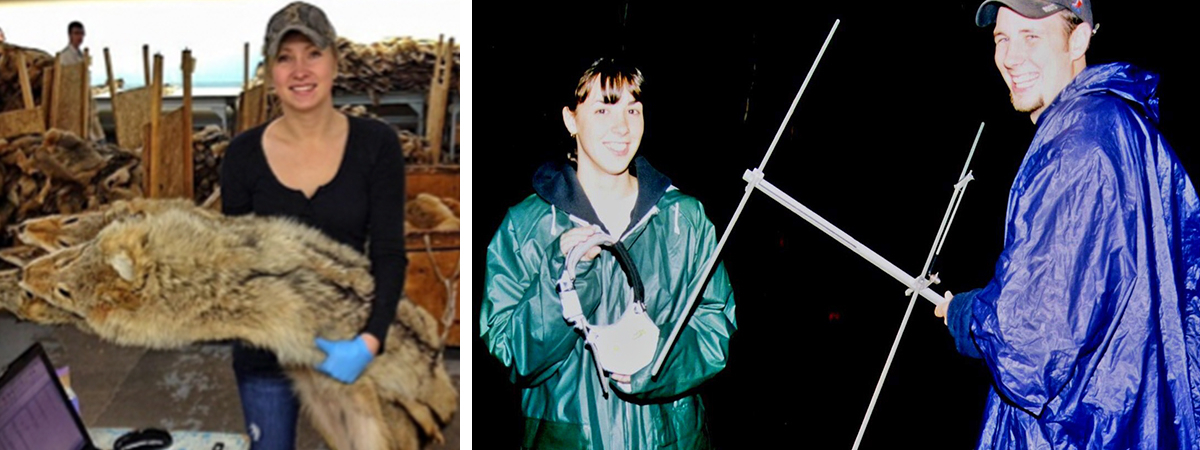
Jennifer Bertin measured wolf pelts for morphometric analysis and collected DNA for genetic analysis. Shannon Langlois and Jim Horkey were involved in tracking wolves by radio telemetry and satellite collars
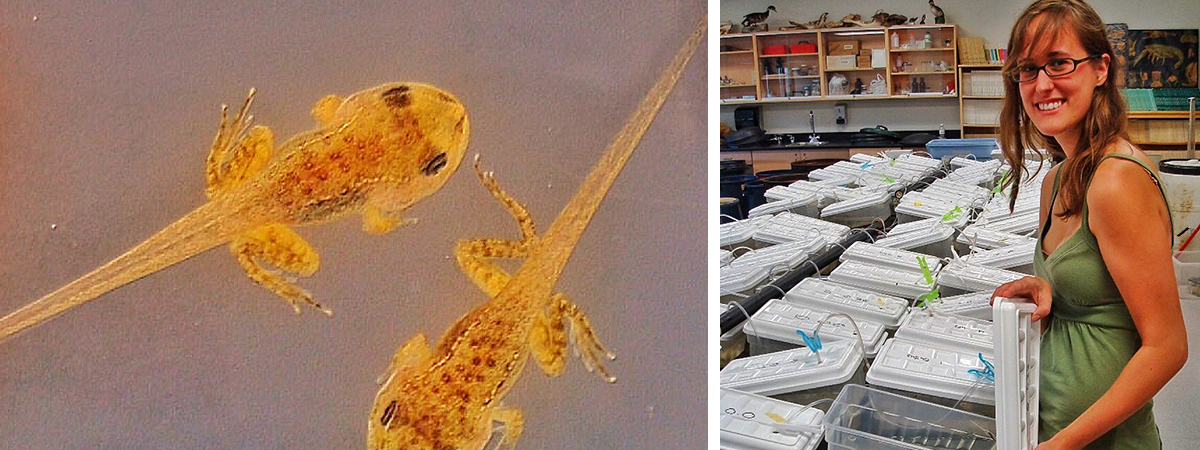
Melissa Lacey monitored a lab full of tadpoles while assessing their reactions to chemical pollutants.
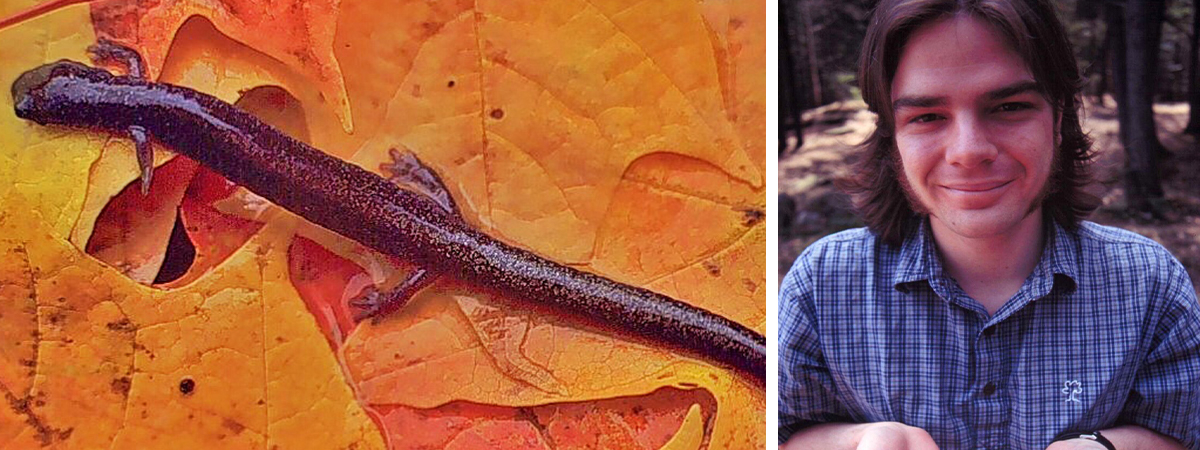
Salamanders are excellent environmental monitors because of their sensitivity to pollutants and to climate change. Njal Rollinson, now a Professor at the University of Toronto, studied the territorial behaviour of salamanders near the edge of their range.
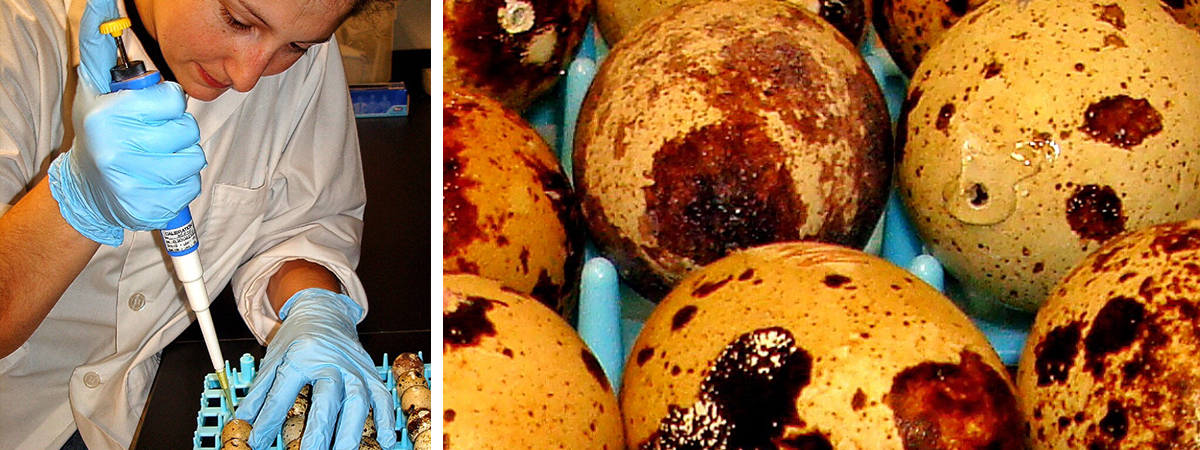
Quail eggs are the perfect medium for investigating chemicals that affect birds. Brittany Barkley drilled tiny holes in the shells to inject and seal micro-quantities of test substances into the developing eggs.
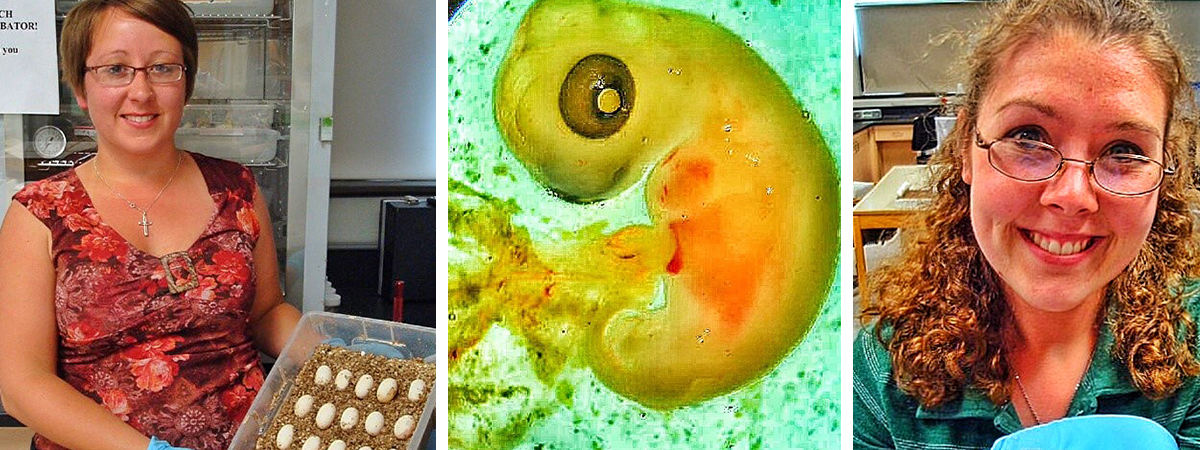
Jackie and Jessica studied endocrine-disrupting chemicals (“gender benders”) that can reverse the genders of turtles and other animals as they develop.
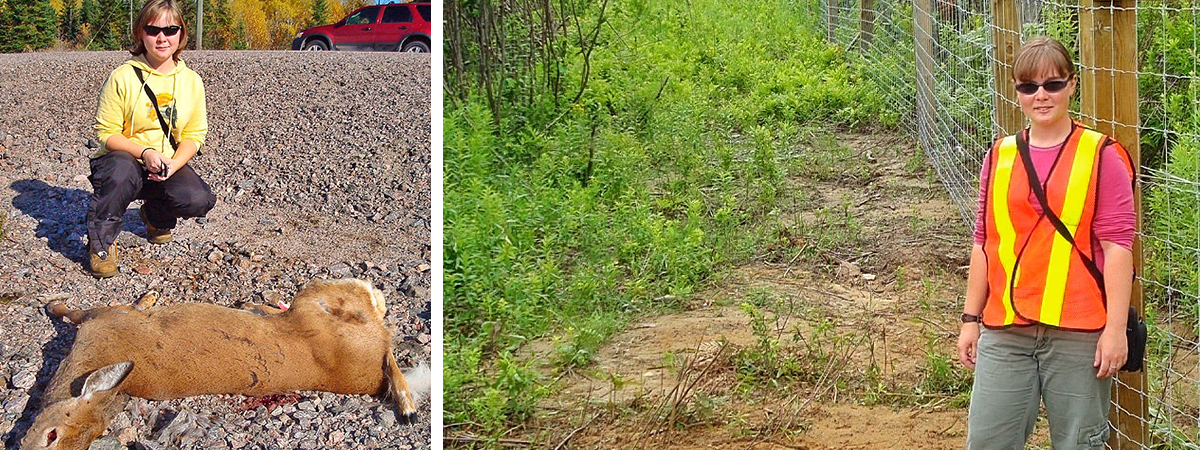
Valerie Vaillancourt studied the effectiveness of specially designed herbivore fences and gates at reducing car collisions with deer and moose.
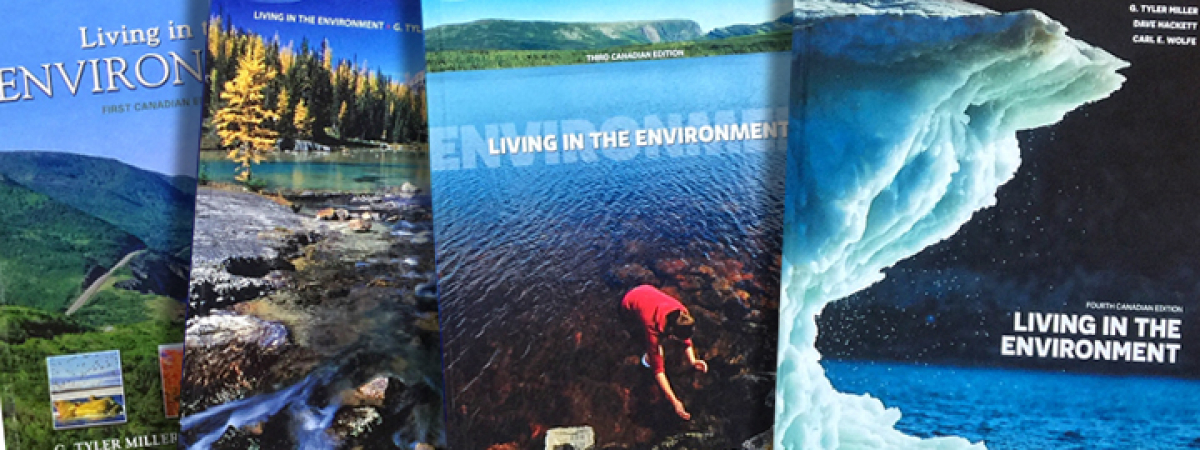
Nipissing University students participate in various stages of producing Canada’s market-leading Environmental Science textbook.